


close
Choose Your Site
Global
Social Media

Author: KUER Publish Time: 2026-03-16 Origin: Site
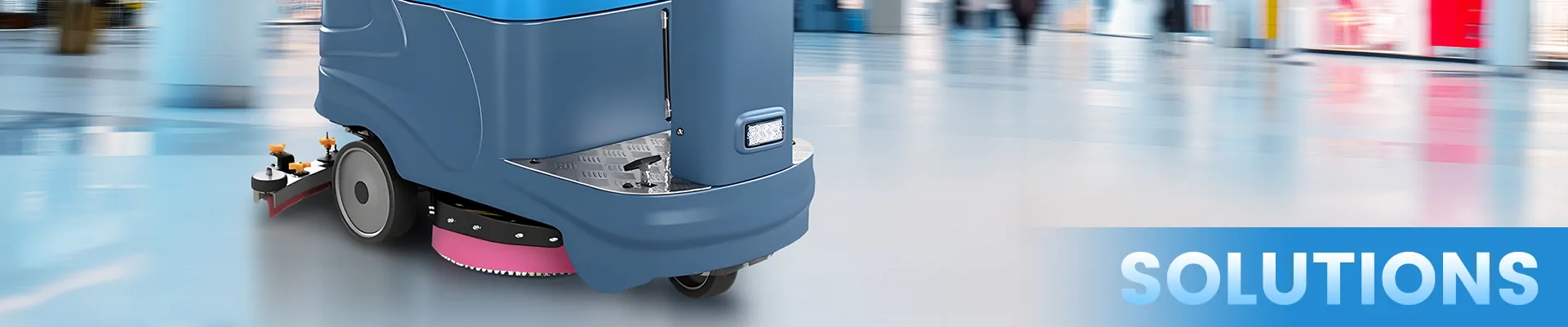
In various large warehouses, concrete floors are the main type of flooring, and a lot of dust, debris, and other particles are generated during daily operations. If everything relies on traditional mops for manual cleaning, not only is the efficiency low, but the cleaning quality is also poor. Therefore, many large warehouses have started using ride-on floor scrubbers for cleaning, thereby improving the overall cleaning efficiency.
For warehouses or storage centers covering tens of thousands of square meters, cleaning efficiency is very important. Manual cleaning is too slow, but the use of ride-on floor scrubbers can significantly improve efficiency. And the cleaning width of the cab-mounted floor scrubber is usually between 500-1000mm, and the driving speed is relatively fast, with a cleaning efficiency of over 5000 square meters per hour. A warehouse with an area of 10,000 square meters can be cleaned in as little as 2 hours. Significantly reduced working hours, and modern ride-on floor scrubbers now come with a floor drying system in addition to floor cleaning, allowing for immediate cleaning and drying of surfaces, which can cover and clean various floor environments in warehouses.
In addition to the ride-on version, there are also hand-pushed versions of warehouse floor scrubbers on the market. So, what are the differences between these two types of machines?
First: Operating Method
The biggest difference between push-type and ride-on floor scrubbers lies in the operating method. Push-type scrubbers require the operator to push the machine from behind to complete the cleaning task, while ride-on scrubbers allow the operator to control the direction using the steering wheel, eliminating the need for pushing and making it more labor-saving.
Second: Cleaning Efficiency
Due to the operating method, a walk behind floor scrubber needs to move slowly to achieve the desired cleaning effect, preventing excessive speed from affecting the overall cleaning performance. Additionally, the brush head of a push-type floor scrubber is relatively small, resulting in a narrower overall cleaning width. The ride-on floor scrubber has a wider cleaning width and most machines feature a dual brush design and a large water tank, which reduces the need for frequent water changes during operation, ensuring continuous operation without the need for constant refilling.

For ride-on floor scrubbers for warehouse floors, you need to choose based on your warehouse area, floor material, etc. A suitable machine often has the following characteristics: First is the size of the machine, as there can be a significant difference in size between ride-on machines. For warehouses with slightly narrow aisles, a smaller ride-on scrubber would be more appropriate, while for warehouses with wider aisles, the advantages of a larger scrubber will be more evident. Secondly, ride-on floor scrubbers generally require a brush head and a squeegee pressure adjustment system. This allows for effective removal of some deep-seated stains, and also enables the use of different pressures for cleaning on various types of surfaces, effectively protecting the floor. The third requirement is sufficient battery life, as warehouse areas are often quite large and a single cleaning session may take several hours, so the battery's endurance is also a standard for measuring the quality of a machine. The fourth point is the dust-proof design. Many warehouses use cement floors, which accumulate a lot of dust over time. When the machines are operating or parked, dust will inevitably settle on various parts of the machines, which can accelerate their aging or cause malfunctions over time. Therefore, the dust-proof design of the machine is also crucial.
When choosing a best ride-on floor scrubber for warehouses, you should focus on factors such as the machine's cleaning width and battery life. Selecting a suitable industrial floor scrubbers can not only meet the overall cleaning needs of the warehouse but also effectively reduce long-term operating costs.


