


close
Choose Your Site
Global
Social Media
Views: 0
In modern industrial and commercial cleaning environments, choosing commercial floor scrubbers can significantly improve overall cleaning efficiency. Compared to traditional mopping methods, commercial floor scrubbers can perform both scrubbing and vacuuming in a single operation. They have become an indispensable cleaning equipment in warehouses, factories, shopping malls, and other industrial and commercial facilities.
However, in actual use, many operators are prone to making mistakes due to a lack of experience or improper operation. These errors can not only affect the overall cleaning performance but may also reduce the lifespan of the equipment. This article will introduce the most common mistakes when using a floor scrubber and the corresponding solutions.
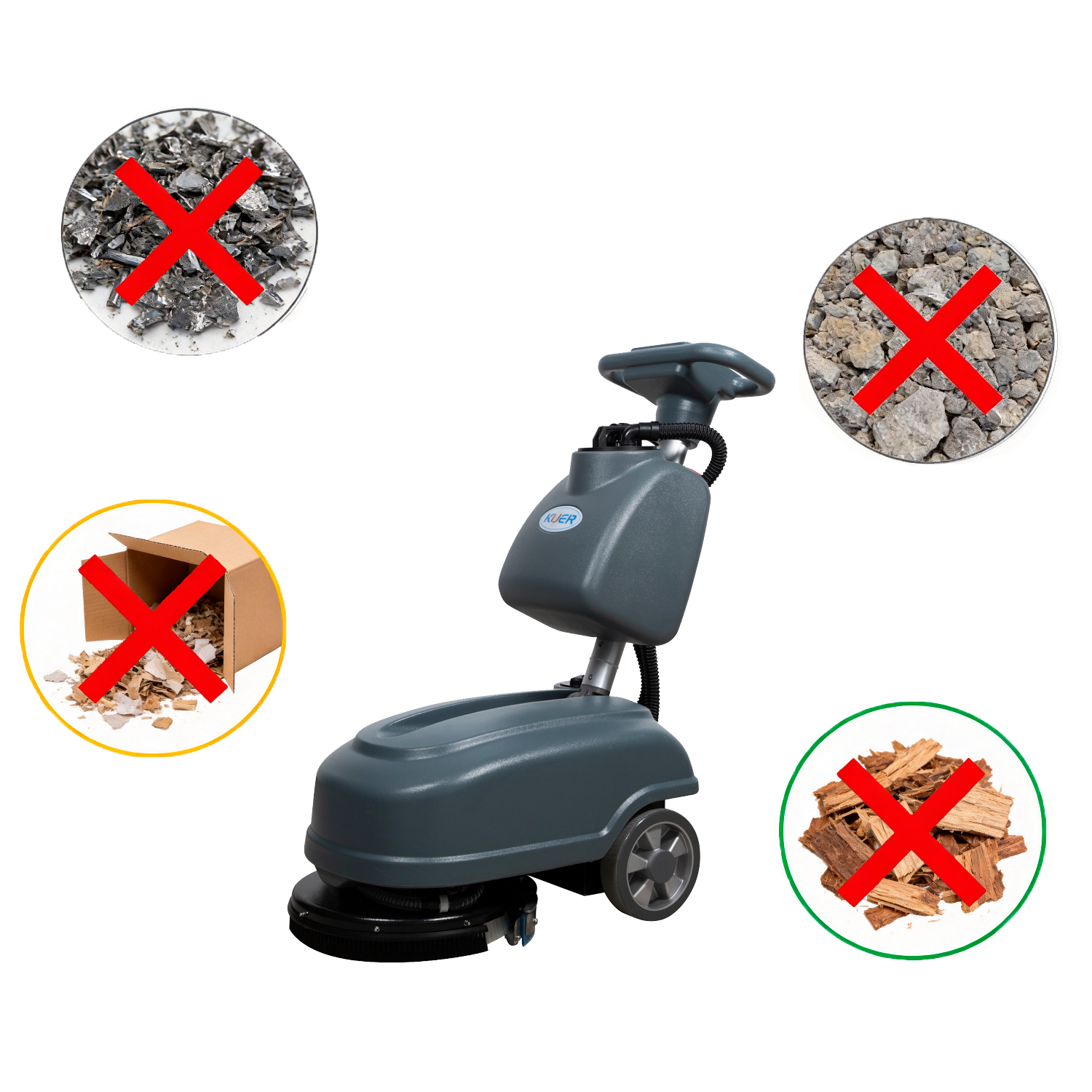
Many users choose to start using the floor cleaning machine right away when they first get it, and thus forget to clean up the debris on the floor. The correct way to use it is to first remove common ground debris such as sand, wood chips, plastic fragments, and metal scraps to prevent these debris from getting into the brush head during cleaning, which could cause scratches on the floor, jam the brush head, or block the machine's water suction system. This can effectively protect the equipment and improve overall cleaning efficiency.
Many people think that the more cleaning agent used, the better when dealing with heavily soiled or greasy floors, but in reality, too much cleaning agent is not good for the machine. Excessive cleaning agent can cause excessive foam during floor cleaning due to friction with the brush, leading to an overabundance of foam in the wastewater tank and affecting the overall wastewater recovery system. And many users do not pay attention to the pH level of the detergent when choosing it, which can also cause corrosion to the machine's casing. The correct method is to use a neutral detergent and add it in the correct proportion; generally, only a small amount of detergent is needed to achieve the desired cleaning effect.
When performing cleaning tasks, some operators speed up the movement of the floor scrubber to save time. If the movement speed is too fast, the contact time between the brush and the floor is insufficient, which may result in incomplete cleaning of stains, water residue, or uneven cleaning. The correct approach is to maintain the operating speed and temperature during operation, and to slightly overlap each cleaning path to ensure the floor is thoroughly cleaned.
The squeegee is a very important component in the sewage recovery system of a floor cleaning machine. It is responsible for collecting the sewage back into the sewage tank. If the squeegee wears out or the suction pipe becomes clogged, it can leave water marks on the floor. Common causes include worn-out squeegee strips, clogged suction ports, or deformed strips. The correct approach is to regularly maintain the squeegee and promptly remove debris or replace the strips.
Many users fail to clean the sewage tank promptly after completing cleaning tasks, leading to long-term storage of sewage in the machine's tank. This practice can cause the sewage to emit odors and breed bacteria, affecting the machine and overall hygiene. Especially in places with high cleanliness requirements, the sewage tank needs to be cleaned and rinsed with clean water after each use. Ensure the cleanliness of the machine's wastewater tank.
When purchasing a commercial floor scrubber, a medium-hardness brush disc is usually the default option, which is suitable for most floor environments. However, some surfaces still require the use of other types of brush discs, and choosing the wrong brush disc can significantly affect the overall cleaning performance. For example, surfaces like wooden floors that are prone to wear and tear need to be cleaned with soft brushes such as scouring pads. For cleaning concrete surfaces, a medium or higher hardness brush disc can be used. The correct usage requires selecting a brush that is more suitable for the surface environment, which can both improve overall cleaning efficiency and protect the floor.
Although commercial floor scrubbers are easy to operate, they still require regular maintenance. If the daily maintenance of the machine is neglected, the performance of the equipment may decline. Common maintenance tasks mainly involve checking the wear level of the brush disc, the battery's charge status, and whether there are any blockages in the machine's water pipes. Regular maintenance can effectively improve the overall cleaning performance of the machine and significantly extend its lifespan.
As a high-efficiency floor cleaning device, the correct operating method for a commercial floor scrubber is very important. Avoiding common usage mistakes during use, such as not cleaning debris, using excessive amounts of detergent, operating too quickly, and neglecting equipment maintenance, can significantly improve cleaning effectiveness and extend the lifespan of the equipment.
By properly using and maintaining floor scrubbers, more efficient, safer, and more professional floor cleaning can be achieved in warehouses, factories, and commercial spaces.


