


close
Choose Your Site
Global
Social Media


Views: 0 Author: Site Editor Publish Time: 2026-06-22 Origin: Site


Choosing the wrong scrubber can waste labor, space, and budget. A walk behind floor scrubber is not always too small, and a ride on scrubber is not always the better upgrade. In this article, you will learn how to compare speed, layout, cost, comfort, storage, and real cleaning needs before buying.
● A walk behind floor scrubber is usually better for small and medium areas, narrow aisles, offices, schools, clinics, shops, and spaces with many obstacles.
● A ride on floor scrubber is usually better for large areas, open layouts, long cleaning routes, warehouses, factories, malls, and high-frequency cleaning.
● The best choice depends on floor size, cleaning time, labor cost, traffic level, storage space, and operator training needs.
● A walk behind scrubber often costs less upfront and is easier to store, but it may need more operator time in large facilities.
● A ride on scrubber costs more at first, but it can reduce cleaning time and operator fatigue when the floor area is large enough.
● Always measure aisles, doors, ramps, and turning areas before comparing machines.
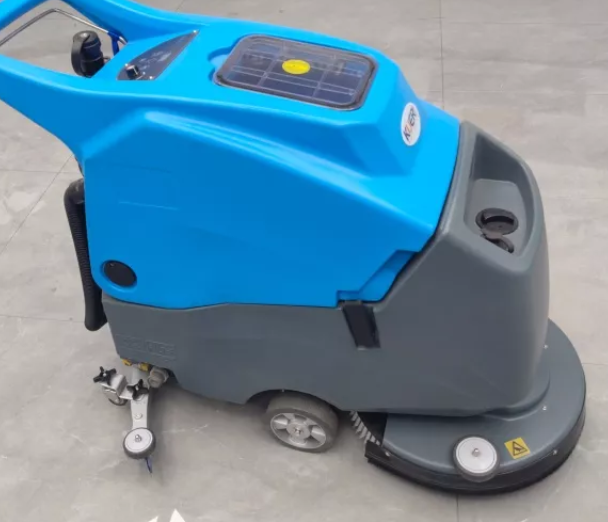
The biggest difference is coverage. A ride on floor scrubber is built for faster cleaning across wide spaces. The operator sits, drives, and covers more floor in less time. It also usually has larger tanks, so it can work longer before stopping.
A walk behind floor scrubber is slower, but that does not mean it is weak. It works well in smaller or divided spaces where speed is less important than control. If your facility has many rooms, corners, narrow aisles, and doorways, a compact walk behind scrubber may finish the job more smoothly than a large ride on machine.
A walk behind scrubber gives the operator close control. It can move around shelves, counters, furniture, machines, and tight corners. This makes it useful for retail stores, schools, clinics, offices, workshops, and small warehouses.
A ride on scrubber needs more room. It performs best in open spaces where it can move in long, steady paths. If the layout is crowded, the operator may spend too much time turning, reversing, or avoiding obstacles.
Operator comfort matters when cleaning takes hours. With a walk behind floor scrubber, the user still walks behind the machine and guides it through the cleaning route. Self-propelled designs reduce effort, but the operator still stays on foot.
With a ride on scrubber, the operator sits while cleaning. This reduces fatigue on long routes. For daily cleaning in large buildings, this can improve both speed and consistency.
Walk behind scrubbers usually have a lower purchase cost, smaller tanks, and easier storage needs. Ride on scrubbers usually have higher initial cost, larger tanks, and better productivity in large areas.
Comparison Point | Walk Behind Floor Scrubber | Ride On Floor Scrubber |
Best area type | Small to medium spaces | Large open spaces |
Maneuverability | Strong in tight layouts | Better in wide areas |
Operator comfort | More walking required | Seated operation |
Upfront cost | Usually lower | Usually higher |
Storage need | Compact | Needs more space |
Best use | Narrow aisles, detail cleaning | Warehouses, factories, large halls |
Note:Before choosing, check cleaning area, layout, cleaning frequency, budget, training, storage, and facility limits. These are key selection factors in scrubber comparisons.
A walk behind floor scrubber is a strong choice when the cleaning area can be finished within a normal shift. It suits buildings where the cleaning task is steady but not massive. For example, it can work well in schools, clinics, small warehouses, office buildings, supermarkets, restaurants, and service areas.
If your cleaning team does not need to cover a huge open floor every day, a walk behind scrubber may give enough cleaning power without overspending. It also fits teams that clean several smaller areas instead of one large zone.
For narrow aisles, a walk behind scrubber is often the safer and smarter option. The operator can see the floor closely and guide the machine through tight paths. This helps when the area has shelves, desks, beds, machinery, pallets, or display racks.
In spaces with many turns, a larger ride on scrubber may lose its speed advantage. It may clean fast in a straight line, but if it cannot turn easily, it becomes less practical. A walk behind floor scrubber can handle these spaces with better control.
A walk behind floor scrubber often makes sense for buyers who need a practical machine without a high upfront investment. It is usually easier to purchase, easier to store, and easier to train new staff on.
This matters for companies that want to move away from manual mopping but are not ready for a large ride on unit. A walk behind scrubber gives a clear step up in cleaning efficiency while keeping the buying decision manageable.
Walk behind scrubbers are also useful for edge areas and spot cleaning. Operators can clean near corners, walls, entrances, counters, production equipment, and high-traffic paths. The machine stays close to the operator, so small spills or dirty patches are easier to manage.
Tip:If your floor has many obstacles, test the full cleaning route before buying. Do not judge only by total square footage.
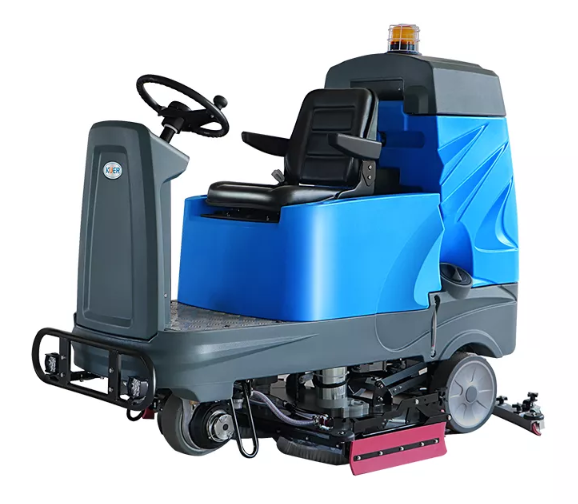
A ride on floor scrubber is designed for productivity. It is a better fit for broad, open floors such as warehouses, factories, logistics centers, malls, airports, exhibition halls, and large public buildings.
These spaces need consistent cleaning across long routes. A ride on scrubber can move faster, hold more water, and reduce stops. When the layout is open enough, its productivity advantage becomes clear.
If your team cleans the same large floor every day, or several times per day, time savings become more important. A ride on scrubber helps reduce the hours needed for each cleaning cycle. It can also support facilities that operate across multiple shifts.
For a busy warehouse or manufacturing plant, long cleaning delays can affect work schedules. A ride on scrubber can help the team finish cleaning faster and keep the floor ready for daily operations.
In many commercial facilities, labor time costs more over the long term than the machine itself. A ride on scrubber may cost more at first, but it can save hours when used in the right space.
This is where a ride on floor scrubber comparison becomes important. Do not compare only the purchase price. Compare how many hours each machine needs per day, how many operators are required, and how often the machine must stop for water or battery management.
Long routes increase operator fatigue. Even when a walk behind scrubber is self-propelled, the operator still walks the full route. Over time, this may reduce speed and consistency.
A ride on scrubber allows seated operation. This helps the operator stay comfortable during long shifts and large-area cleaning. It is especially useful when the floor is open, the path is simple, and the cleaning schedule is frequent.
Note:A ride on scrubber is not automatically better. It only makes sense when your layout gives it enough room to move efficiently.
A walk behind floor scrubber usually wins on upfront cost. It is a practical choice for facilities that need better cleaning than manual methods but do not have the budget or space for a ride on unit.
A ride on scrubber may win on long-term operating cost if it reduces labor time enough. For example, if one operator can clean a large space faster every day, those saved hours add up. The higher price may become reasonable when the machine is used often.
Before buying, estimate how much floor must be cleaned, how often it must be cleaned, and how long each option may take. A simple calculation can prevent a costly mistake.
Start with total square footage or square meters. Then review the cleaning path, tank size, battery runtime, and expected working speed. Also include time for refilling, draining, charging, moving between areas, and cleaning the machine after use.
If a walk behind scrubber can finish the area without strain, it may be the better value. If it takes too long every day, a ride on scrubber may be more cost-effective.
The total cost includes more than the machine. Brushes, pads, squeegee blades, batteries, chargers, filters, hoses, tires, and service work all affect the real budget.
Walk behind scrubbers are often simpler to maintain because they are smaller and easier to access. Ride on scrubbers may need more service planning, but they also handle larger tasks. The right choice depends on how hard the machine will work.
The cheapest machine is not always the lowest-cost machine. If a small walk behind floor scrubber is used in a huge warehouse, the operator may spend too many hours cleaning. It may also require more refills, more battery management, and more labor.
At the same time, buying a large ride on scrubber for a tight building can waste money. It may not fit through key areas or may need too much storage space.
Tip:Ask for a cleaning route review before purchase. The best machine is the one that fits the actual floor, not just the budget sheet.
Always measure before choosing. Check door widths, aisle widths, corridors, elevators, ramps, turning points, and storage entrances. A scrubber that looks good on paper may fail if it cannot pass through a key doorway.
This is especially important for narrow aisles. A floor scrubber for narrow aisles should turn easily and allow the operator to work without damaging racks, walls, or goods. In many cases, a walk behind scrubber provides better control.
Floor type also matters. Smooth floors may allow faster cleaning. Textured floors, tile grout, epoxy floors, concrete, and oily surfaces may need stronger brush pressure or more careful cleaning passes.
A commercial scrubber should match the soil level. Light dust in an office needs a different approach from grease in a workshop or tire marks in a warehouse. If the floor is heavily soiled, check brush pressure, water recovery, and drying performance before choosing.
Traffic affects cleaning speed. Pedestrians, forklifts, carts, pallets, furniture, machines, and production lines can make a large machine harder to use. If the facility is busy during cleaning hours, a compact walk behind floor scrubber may be easier to control.
If cleaning happens after hours in a clear open space, a ride on scrubber may work better. The operator can move faster without stopping often.
A floor scrubber needs more than floor space. It needs a place to fill clean water, drain recovery water, charge batteries, clean tanks, and store accessories. Ride on machines often need more room for these steps.
Walk behind scrubbers are easier to store in smaller utility rooms. Kuerclean’s public product pages also present walk-behind floor scrubbers as compact machines for confined spaces and professional cleaning performance, while its product range includes walk-behind scrubbers, ride-on scrubbers, and sweepers for commercial and industrial use.
Note:Storage space should be checked before purchase, not after delivery. Charging and water access can affect daily use.
Some buyers compare a walk behind scrubber vs ride on scrubber only by size, price, or cleaning width. That is risky. The real test is the cleaning route. Walk the full route and note every narrow point, ramp, turn, and obstacle.
Labor cost can change the final decision. A lower-cost walk behind floor scrubber may be smart for a compact facility. But in a large area, slow cleaning may cost more over time. If the team cleans daily, even small time savings can matter.
A ride on scrubber may look more powerful, but it is not ideal for every facility. If your space has many corners and narrow paths, it may be too large. It may also require extra storage, training, and service planning.
Think about future growth. If your facility will expand soon, choose a machine that can still support the next stage. If your layout will remain compact, a walk behind scrubber may remain the better long-term fit.
For small spaces, tight layouts, and controlled cleaning, a walk behind scrubber is often the smart choice. For large open areas and long routes, a ride on scrubber can save time. Hefei Kuer Environmental Protection Technology Co., Ltd.offers commercial floor scrubbers and sweepers built for practical facility cleaning, helping users match equipment to real floor conditions.
A: A walk behind floor scrubber offers better control in tight spaces.
A: Yes, it suits large open areas and long routes.
A: Compare purchase price, labor hours, maintenance, and battery use.
A: A walk behind scrubber is usually easier to steer.
A: It reduces fatigue and cleans large areas faster.


