


close
Choose Your Site
Global
Social Media


Views: 0 Author: Site Editor Publish Time: 2026-10-14 Origin: Site


Are rising labor wages hurting your plant's profit margins? Manual cleaning drains hundreds of valuable man-hours every month, transforming a necessary maintenance task into a significant financial burden. Upgrading to mechanized solutions cuts costs directly. In this post, you will learn the financial benefits of modernizing your floor care strategy and discover how to achieve a rapid return on investment by shifting away from outdated methods.
Recent market reports highlight a severe labor squeeze across the manufacturing and logistics sectors. As labor shortages persist and wage expectations climb, facility managers face a structural deficit in their workforce. Consequently, automated and mechanized cleaning equipment is no longer viewed as mere janitorial supply. It is now classified as a critical operational asset. This macroeconomic trend demonstrates that minimizing manual intervention in routine facility upkeep directly correlates with sustained profitability, regulatory compliance, and enhanced workplace safety.
Key Takeaways
Massive Time Savings: Industrial cleaning equipment covers large spaces significantly faster than manual methods, drastically reducing required labor hours.
High ROI: By cutting cleaning times, advanced sweeping equipment often pays for itself within the first 6 to 12 months of operational use.
Staff Reallocation: Less time spent sweeping means your maintenance crew can focus on higher-value, revenue-protecting facility tasks.
Improved Worker Retention: Ergonomic riding equipment reduces physical fatigue, which directly lowers injury rates and employee turnover.
Long-Term Reliability: Modern machines offer a remarkably low Total Cost of Ownership through highly durable designs and efficient battery life.
For industrial facilities, maintaining a pristine environment extends far beyond basic aesthetics. It is a fundamental requirement for operational safety and strict regulatory compliance. However, relying on manual sweeping or undersized equipment represents a massive financial leak for large-scale plants. Paying hourly wages for slow, physically demanding manual labor means a substantial portion of your maintenance budget is absorbed by sheer inefficiency.
When workers rely on push brooms or small, outdated walk-behind units, hidden costs rapidly compound. Cleaning naturally takes longer. This frequently triggers overtime pay just to meet baseline cleanliness standards. To illustrate this dynamic, imagine a busy distribution center where manual cleaning results in extended downtime for specific loading zones. This effectively bottlenecks the flow of production. Furthermore, inconsistent cleaning quality leaves behind fine dust and hazardous debris. These remnants can precipitate slip-and-fall incidents or severely damage sensitive manufacturing machinery.
In a high-volume industrial setting, time remains the most expensive commodity. Every single hour a skilled maintenance worker spends pushing a broom is an hour stolen from critical facility upkeep, machinery inspection, or direct production support. This misallocation of human resources severely impacts the bottom line.
When semi-skilled personnel are bogged down by low-efficiency janitorial chores, facilities are forced to make a difficult choice. They must either hire additional headcount to cover core duties or risk severe equipment degradation due to deferred maintenance. Transitioning to automated, high-capacity cleaning solutions shifts this paradigm entirely. It transforms floor care from a continuous labor drain into a streamlined, predictable engineering process.
The primary advantage of overhauling facility maintenance protocols lies in the staggering volume of space managed in a fraction of the time. A standard manual sweeping routine might cover approximately 2,000 to 3,000 square feet per hour. This rate is heavily dependent on the worker's stamina and the density of scattered debris. By stark contrast, a commercial Ride On Sweeper is specifically engineered to clean anywhere from 40,000 to over 60,000 square feet within a single hour.
This exponential increase in operational speed is driven by the machine's expansive cleaning path and consistent velocity. Consider a facility manager overseeing a sprawling 100,000-square-foot warehouse. A task that would consume an entire eight-hour shift for a team of manual sweepers can be effortlessly completed by a single seated operator in roughly two hours. This single metric powerfully demonstrates why large-scale sweeping machinery is classified as a strategic asset.
Raw speed holds little value if the cleaning quality deteriorates. Fortunately, modern riding machines are meticulously designed for one-pass cleaning efficiency. Equipped with high-velocity vacuum suction, advanced multi-stage filtration systems, and robust dual-brush mechanisms, these units perform multiple actions simultaneously. They agitate, lift, and capture heavy industrial debris ranging from jagged metal shavings and gravel to pallet splinters and microscopic concrete dust.
By capturing both bulky waste and fine particulate matter in a single pass, operators completely eliminate the need for frustrating rework or secondary dust-mopping. This capability proves crucial in manufacturing plants where airborne dust threatens to settle on valuable inventory or compromise employee respiratory health. Ultimately, the machine's efficiency guarantees that the factory floor is left safe, spotless, and immediately ready for heavy forklift traffic.
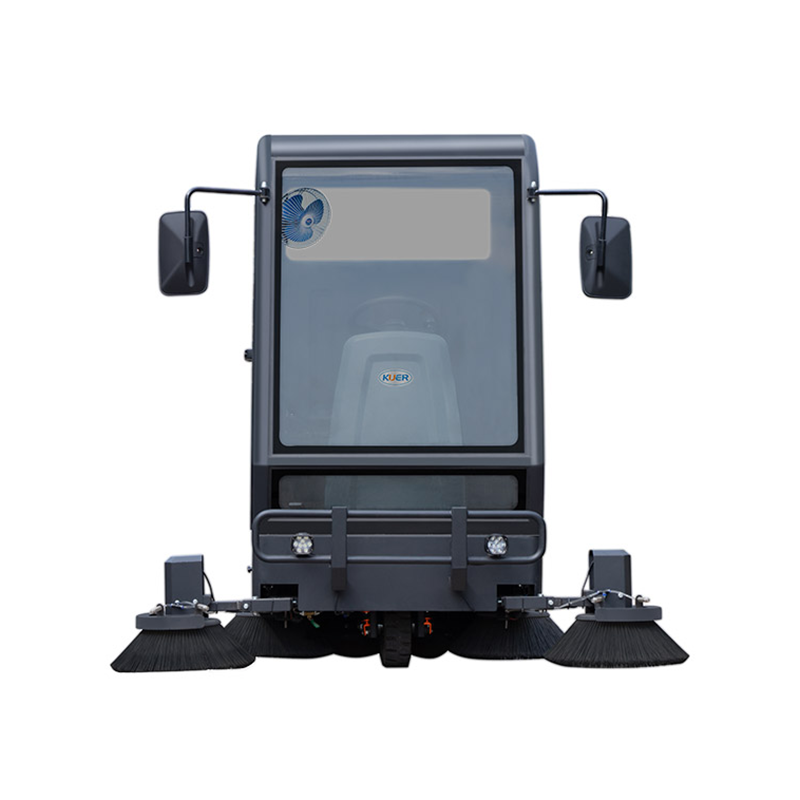
When evaluating floor care equipment, procurement officers frequently weigh the lower initial price tag of a walk-behind unit against the premium of a riding model. While walk-behind units appear cheaper upfront, comprehensive time and motion studies reveal a drastically different narrative regarding long-term labor expenditures.
A worker operating a walk-behind scrubber typically trudges at a pace of 2 to 2.5 miles per hour. Conversely, a mechanized riding model operates efficiently at speeds of 4 to 6 miles per hour. This doubling of operational speed literally cuts the required labor time in half. To illustrate this objectively, consider the following performance comparison.
Metric | Manual Push Broom | Walk-Behind Sweeper | Ride-On Sweeper |
|---|---|---|---|
Average Speed | 1.5 mph | 2.5 mph | 5.0 mph |
Cleaning Width | 24 inches | 32 inches | 48+ inches |
Coverage per Hour | ~3,000 sq. ft. | ~15,000 sq. ft. | ~50,000+ sq. ft. |
Labor required for 100k sq. ft. | ~33 Hours | ~6.5 Hours | ~2 Hours |
Beyond raw travel speed, operator fatigue plays a pivotal role in accurate labor cost calculations. Pushing a heavy walk-behind machine across a massive, unyielding concrete floor for several hours induces significant physical strain. As the shift drags on, the operator's walking pace naturally decelerates. This causes a noticeable drop in productivity and inconsistent, patchy cleaning results toward the end of the day.
Seated machinery completely neutralizes this variable. Because the operator rests comfortably while steering the unit mechanically, physical exhaustion is virtually eliminated. The equipment maintains a uniform speed and consistent downward brush pressure from the very first minute of the shift to the last. This ensures that paid labor hours are maximized without burning out your vital workforce.
To truly grasp how a facility can slash cleaning costs by up to 50%, we must examine a practical cost-comparison model. Labor consistently ranks as the most expensive component of facility upkeep, often swallowing 80% to 90% of total cleaning budgets.
Assume a manufacturing plant compensates a maintenance worker at $25 per hour, inclusive of benefits and overhead. If the facility requires 40 hours of manual sweeping per week to uphold safety standards, the weekly cost is $1,000. This translates to a staggering $52,000 annually. By implementing a riding machine, the expanded cleaning width and accelerated speed shrink the required time to a mere 10 hours per week. This reduces the weekly expense to $250, or $13,000 annually.
Under this scenario, the facility liberates 30 hours of labor budget every single week, yielding an annual savings of $39,000. These reclaimed funds can be directly applied against the initial purchase price. In most industrial applications, this results in a full return on investment in under twelve months.
While immediate labor savings are undeniably substantial, prudent procurement officers must also weigh the Total Cost of Ownership. This metric encompasses the initial acquisition price, routine maintenance, consumable replacement parts like brushes and squeegees, and eventual battery replacements.
Modern Industrial Sweeper models are engineered for unrelenting long-term reliability. By integrating heavy-duty steel frames, impact-resistant rotationally molded plastics, and simplified mechanical components, manufacturers have drastically curtailed maintenance downtime. When analyzing the complete financial picture, empirical data consistently demonstrates that the tens of thousands of dollars saved annually on labor exponentially outweigh the routine upkeep and depreciation costs of the physical asset.
Industrial cleaning is inherently physically demanding. When maintenance crews are required to use push brooms or small manual sweepers across thousands of square feet, the physical toll becomes a significant operational liability. Repetitive strain injuries, lower back pain, and severe foot fatigue are common among workers tasked with manual floor care. Furthermore, traditional sweeping methods often kick up hazardous particulate matter. This exposes employees to airborne dust that can compromise respiratory health and violate stringent Occupational Safety and Health Administration standards.
Investing in advanced riding equipment directly addresses these ergonomic and safety concerns. By transitioning from manual labor to mechanized operation, operators are seated comfortably and protected from the biomechanical stress of pushing heavy loads. Modern sweepers are designed with ergonomic steering, adjustable seating, and vibration-dampening technology that drastically reduces physical fatigue. Additionally, these machines utilize advanced vacuum and filtration systems that capture dust before it becomes airborne, ensuring a safer indoor air quality for the entire facility.
In today’s industrial sector, employee turnover is a costly metric. The financial burden of recruiting, hiring, and training new janitorial or maintenance staff can quickly erode a facility's operational budget. Workers who feel physically overworked and undervalued are far more likely to seek employment elsewhere.
Providing your maintenance crew with modern, high-performance equipment sends a clear psychological message. It proves the company values their health, safety, and operational efficiency. Operating specialized machinery elevates the cleaner's role from manual labor to equipment operation, fostering a sense of professional pride and technical responsibility. Facilities that upgrade to riding equipment frequently report higher job satisfaction rates, fewer sick days, and a noticeable decrease in employee turnover.
Historically, large industrial cleaning machines relied on internal combustion engines powered by propane or diesel. These introduced secondary costs including fuel consumption, exhaust ventilation requirements, and frequent mechanical maintenance. Today, the landscape is dominated by advanced electric and battery-operated technology.
Next-generation sweepers feature high-capacity, maintenance-free batteries that deliver extended run times. For instance, flagship models like the KUER-SJ2000 are engineered with robust battery systems that allow continuous operation for 4 to 6 hours on a single charge. Combined with a massive sweeping width of up to 2000mm and a high-capacity debris hopper, operators can cover vast expanses without constant dumping stops or unproductive charging downtimes. These eco-friendly power sources produce zero indoor emissions, making them perfectly safe for closed warehouse environments and food processing plants.
To maximize long-term cost-efficiency, modern sweepers are engineered with smart technology and modular components. Intuitive control panels, pre-programmed sweeping modes, and automated brush pressure adjustments remove the guesswork from floor care. This minimizes the learning curve, meaning new operators can be trained quickly without the need for expensive instruction.
Machine downtime is a hidden cost that facility managers must avoid at all costs. Next-gen equipment is designed for simplified, tool-free maintenance. Operators can easily access, inspect, and replace wear-and-tear parts in a matter of minutes. To illustrate the financial impact of upgrading, consider the following comparison between traditional cleaning methods and modern mechanized solutions.
Operational Factor | Traditional Manual Sweeping | Next-Gen Ride-On Technology | Financial Impact |
|---|---|---|---|
Labor Time | High multiple workers required | Low cleans up to 5x faster | Massive reduction in hourly wage expenses. |
Dust Control | Poor pushes dust into the air | Excellent active vacuum & filters | Lowers risk of compliance fines and equipment damage. |
Worker Fatigue | High leads to frequent breaks | Minimal ergonomic seating | Increases active working hours and productivity. |
Maintenance | Low equipment cost, high physical toll | Predictable, tool-free part replacement | Lower Total Cost of Ownership over time. |
Procuring the correct equipment requires a meticulous assessment of your facility’s unique architectural and operational environment. Not all industrial spaces are created equal. Selecting an undersized or improperly specified machine will severely diminish your projected return on investment.
Facility managers should evaluate several critical engineering parameters before making a purchasing decision. First, measure the narrowest pathways in your warehouse. The chosen equipment must possess a tight turning radius to navigate around racking systems without causing impact damage. Next, analyze your floor composition. Whether your facility features polished concrete, epoxy coatings, or rough surfaces, different floor types require specific brush materials to achieve optimal cleaning without scratching the substrate.
Equally important is identifying the debris profile. Fine warehouse dust requires superior vacuum filtration, while heavy manufacturing debris demands a machine with a large hopper capacity and high-torque cylindrical brushes. Finally, if your plant has multiple levels or loading docks, check the machine’s gradeability to ensure it can safely operate on inclines while fully loaded.
Selecting the ideal machine is not merely a transactional purchase; it is a long-term operational partnership. It is highly recommended to collaborate with established commercial cleaning equipment manufacturers who understand the rigorous demands of industrial environments.
By consulting with industry experts, procurement officers can access robust product lineups tailored for heavy-duty applications. For instance, exploring a high-performance Large-Area Sweeper ensures that your facility is equipped with durable, reliable machinery capable of withstanding daily industrial abuse. Reviewing a comprehensive catalog allows facility managers to match specific technical specifications directly to their plant's unique debris profile and square footage.
Choosing the right partner also guarantees access to vital after-sales support, including warranty coverage, replacement parts availability, and technical troubleshooting. All of these factors are essential for maintaining a low overall cost of ownership.
In the modern industrial landscape, labor remains the most expensive and volatile component of facility maintenance. Relying on outdated manual cleaning methods or undersized walk-behind equipment needlessly drains valuable man-hours, artificially inflates the risk of workplace injuries, and ultimately damages the bottom line.
Upgrading to mechanized riding equipment is a proven, data-backed engineering strategy to slash these labor costs by up to 50%. By covering massive square footage in a fraction of the time, eliminating operator fatigue, and providing consistent, one-pass cleaning efficiency, these machines offer a rapid and undeniable financial return. Facility managers looking to protect their workforce, optimize their maintenance budgets, and uphold pristine safety standards should cease wasting capital on slow manual labor. Instead, calculate your specific facility ROI and consider integrating advanced sweeping solutions into your daily operations today. Discover the perfect mechanized solution for your plant by exploring the high-performance models available at Kuer Clean.
The timeframe for achieving a full return on investment depends largely on the square footage of the facility and local labor rates. However, industry benchmarks indicate that most industrial plants recoup their initial investment within 6 to 12 months. This rapid payback period is driven directly by the drastic reduction in labor hours required to maintain facility cleanliness, allowing those wage dollars to be reallocated or saved.
Not at all. Modern industrial cleaning equipment is engineered with user experience in mind. The control panels are highly intuitive, often featuring simple, universally recognized icons and one-button operational modes. With proper guidance, facility maintenance staff can be trained to operate the machinery safely and effectively in less than an hour, minimizing any disruption to daily workflows.
The primary difference lies in the type of cleaning they perform. Sweepers are designed to collect dry debris, dust, dirt, and loose industrial waste using rotating brushes and vacuum systems. Scrubbers, on the other hand, apply water and chemical detergents to the floor, scrub away grease or stubborn stains, and then use a squeegee vacuum to dry the surface. For facilities that require both, combination sweeper-scrubber machines are also available on the market.
Yes. The latest generation of battery-operated equipment utilizes high-efficiency electric motors that deliver immense torque and powerful vacuum suction. They are fully capable of picking up heavy industrial waste, including metal shavings, gravel, pallet splinters, and dense manufacturing dust. Additionally, battery-powered units offer the crucial benefit of zero emissions, keeping indoor air quality safe and compliant.
While every facility is unique, a general industry benchmark suggests that plants or warehouses exceeding 20,000 to 30,000 square feet will see the most immediate and significant labor cost benefits from switching to a riding model. For spaces smaller than this, a high-quality walk-behind machine may suffice, but for expansive layouts, the speed and coverage of a larger unit are necessary to optimize labor efficiency.
Routine maintenance is straightforward and focuses on maximizing airflow and brush efficiency. Daily tasks include emptying the debris hopper, shaking or tapping out the dust filter, and inspecting the main and side brushes for tangled string or shrink wrap. Weekly or monthly maintenance typically involves checking battery water levels for lead-acid batteries, wiping down sensors, and inspecting the condition of the squeegees or dust skirts to ensure a proper seal against the floor.
Battery longevity depends on the battery type and charging habits. Standard lead-acid batteries typically last between 2 to 3 years if properly maintained and watered. Advanced AGM or Lithium-ion batteries can last upwards of 4 to 5 years with zero maintenance. On a daily operational basis, a fully charged industrial sweeper will generally run for 4 to 6 continuous hours, which is more than sufficient to complete heavy-duty cleaning tasks within a standard shift.


