


close
Choose Your Site
Global
Social Media


Views: 0 Author: Site Editor Publish Time: 2026-07-29 Origin: Site


Facility managers face a growing operational challenge today. Rising consumable costs squeeze cleaning budgets while stricter environmental compliance goals demand greener practices. Furthermore, constant machine refilling creates severe labor inefficiencies. Manual mixing and outdated equipment compound these issues daily. Operators often over-dispense chemicals and water during routine maintenance. This habit damages expensive floor finishes and creates hazardous slip-and-fall conditions. It ultimately drains your budget without improving facility hygiene. You need a systematic approach to stop this waste. This guide provides a clear evaluation and implementation framework. You will discover how modern walk behind scrubber technology reduces consumable use. We will also explore essential operator protocols to maximize efficiency on the floor.
Upgrading to machines with onboard chemical dosing eliminates the "glug-glug" manual pouring method, reducing detergent waste and standardizing dilution ratios.
Implementing strict operator pacing and pre-sweeping protocols prevents the need for resource-heavy double passes.
Properly evaluating a walk behind floor scrubber requires looking beyond tank size to assess the flow-rate-to-capacity ratio and solution recovery efficiency.
Routine squeegee and vacuum maintenance is non-negotiable; worn parts leave moisture behind, prompting operators to over-compensate with more solution.
Many cleaning teams treat water and detergent as endless resources. They fill tanks to the brim and pour chemicals without measuring. This unchecked consumption creates a ripple effect across your entire operation.
Wasted detergent quickly destroys your monthly supply budget. When operators use the "glug-glug" method, they often pour three to four times the required chemical volume. This over-dispensing wastes expensive cleaning agents. However, the hidden labor costs often hit harder. Using too much water means the recovery tank fills up faster. Your operators must stop cleaning, drive to the janitor's closet, empty the dirty water, and refill the clean tank. These constant dump-and-fill cycles steal hours of productive labor every week.
Flooding floors with excessive water causes long-term structural damage. Heavy moisture seeps into unsealed concrete and compromises grout lines. It also strips away protective floor finishes prematurely. Beyond property damage, over-dispensing introduces severe safety liabilities. Excess water leaves floors wet for longer periods. This creates lingering slip-and-fall hazards for employees and visitors. OSHA guidelines strictly emphasize maintaining dry walking-working surfaces. Poor moisture control directly violates these basic safety standards.
Excessive chemical use creates toxic runoff. When operators dump highly concentrated recovery water down drains, they harm local water systems. Many modern corporations now operate under strict Environmental, Social, and Governance (ESG) frameworks. Meeting these corporate sustainability benchmarks requires measurable reductions in chemical usage. Over-dispensing directly conflicts with green cleaning initiatives and jeopardizes facility compliance.
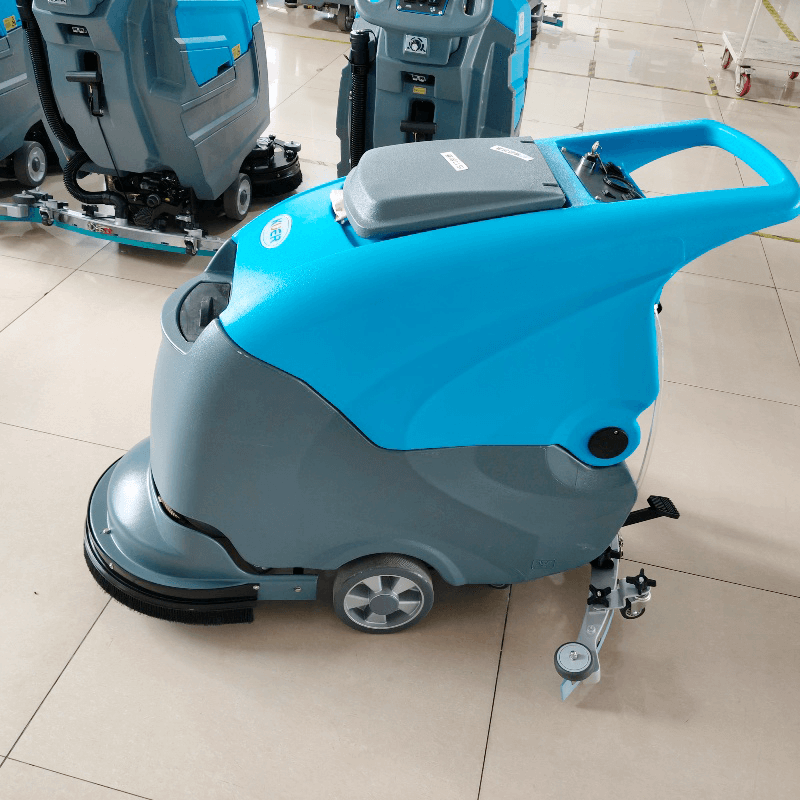
Modern cleaning equipment relies on smart engineering to fix human error. The right machine features automatically restrict resource consumption while boosting cleaning performance.
Traditional machines require operators to mix chemicals directly into the clean water tank. If they mix too much, they must dump the unused solution at the end of the shift. Onboard chemical dosing systems solve this problem by keeping water and chemicals completely separate. The machine stores pure water in the main tank and concentrated detergent in a dedicated cartridge.
These fluids only mix at the brush deck just before hitting the floor. The internal pump regulates the exact manufacturer-recommended dilution ratios. This guarantees perfect chemistry every time and prevents operator guesswork. If your team only needs plain water for a specific hallway, they simply turn the chemical switch off.
Not all floors require a heavy deluge of water. Adjustable flow rates allow operators to match machine output to actual soil levels. For daily dust and light footprints, operators can dial the flow rate down. For winter salt or heavy mud, they can turn it up. Many advanced models feature a dedicated "Eco-Mode." Engaging this setting automatically optimizes pump output and reduces vacuum motor power. It dispenses just enough water to clean while extending tank runtimes and saving battery life.
Putting less water down only works if the machine picks it back up effectively. Advanced solution recovery relies on precise squeegee and vacuum integration. High-quality parabolic squeegee designs curve around the brush deck. They capture water even during tight turns. High-CFM (Cubic Feet per Minute) vacuum motors then pull this moisture into the recovery tank. This synergy maximizes water pickup. It ensures a dry floor in a single pass without needing excess initial water layout.
Technology alone cannot solve wasteful practices. Facility managers must pair capable equipment with disciplined Standard Operating Procedures (SOPs).
Skipping the dust mop remains a common frontline failure. When operators run a scrubber over loose debris, dirt, and dust, they instantly create mud. Mud requires massive amounts of water and heavy chemicals to break down. Pre-sweeping eliminates this problem entirely. Removing dry soil first means operators only need minimal moisture to lift remaining surface stains. Standardize pre-sweeping before the machine ever leaves the supply closet.
Operator speed directly dictates resource efficiency. We often see operators sprinting down hallways to finish their shifts early. Moving too fast reduces chemical dwell time and prevents the brushes from agitating the soil. This poor result necessitates a second, resource-heavy pass. Conversely, moving too slow pools wasted solution and overwets the floor. Train your staff to maintain a steady, moderate walking pace. A slow walk gives the detergent time to emulsify dirt while allowing the vacuum to recover the liquid fully.
Different areas of your building face different soil levels. Treating every square foot identically wastes resources. Train staff to map out facilities and adjust settings dynamically. The table below outlines a standard zone-based approach:
Facility Zone | Typical Soil Level | Recommended Water Flow | Chemical Requirement |
|---|---|---|---|
Main Entrances / Lobbies | Heavy (Salt, Mud, Grease) | High | Standard Dilution (e.g., 1:64) |
Cafeterias / Breakrooms | Medium (Spills, Sticky Residue) | Medium | Standard Dilution |
Interior Office Hallways | Light (Dust, Light Footprints) | Low / Eco-Mode | Water-Only or Very Low Dilution |
Warehouse Aisles | Variable (Dust, Tire Marks) | Low to Medium | Degreaser (Zone Specific) |
By only applying aggressive chemical loads to high-traffic entryways, you save vast amounts of detergent in lightly soiled aisles.
Purchasing the right equipment requires a strategic mindset. You must look beyond basic specifications to understand how the machine manages daily resources. Evaluating the proper walk behind floor scrubber involves matching machine geometry to your floor type.
Many buyers mistakenly prioritize raw tank size. However, a 15-gallon tank with inefficient flow control may empty faster than a 10-gallon tank with smart dosing. You must evaluate the runtime per tank. Check the machine's gallons per minute (GPM) output on its lowest setting. Divide the total tank capacity by the lowest GPM to find your maximum theoretical runtime. Prioritize machines that offer granular flow settings rather than just "on" or "off."
Brush deck selection heavily influences water consumption. Disk decks use flat, spinning pads. They work wonderfully for smooth floors but struggle with loose debris. Cylindrical decks feature tube-like brushes that spin aggressively. They can sweep light debris into a catch tray while simultaneously scrubbing the floor. This dual-action capability prevents mud formation. Cylindrical decks often reduce overall water usage compared to standard disk models when cleaning industrial or warehouse spaces.
Even the most advanced dosing systems fail if the machine falls into disrepair. Routine maintenance is non-negotiable for preserving water and chemical efficiency.
Squeegee Blade Rotation and Replacement: Worn, ripped, or incorrectly tensioned squeegee blades leave streaks. When operators see wet streaks, they mistakenly increase water flow to "fix" the poor result. Squeegee blades usually feature four usable edges. Rotate them regularly. Replace them immediately when all edges round off.
Filter and Line Inspections: Most machines contain an inline solution filter. Debris often clogs this small mesh screen. A clogged filter starves the pump and distributes water unevenly across the brush deck. Clean this filter daily. Also, flush the chemical lines weekly with warm water to prevent soap crystallization and blockage.
Pad/Brush Wear: Brushes and pads provide necessary mechanical friction. Operating with worn pads heavily reduces this friction. Operators often notice the drop in cleaning quality and incorrectly try to solve it by dumping more detergent on the floor. Replace pads when they compress to half their original thickness. Replace brushes when the bristles begin to curl or fray.
Reducing water and detergent consumption requires a balanced approach. It relies on a combination of smart machine procurement and disciplined operator routines. You must equip your team with technology like automated dosing and variable flow control to eliminate the manual "glug-glug" method. Equally important, you must enforce strict pre-sweeping and pacing protocols to maximize the machine's mechanical friction.
Your next step is to conduct a facility audit. Track your current monthly chemical spend and assess your facility's specific soil zones. Once you map your needs, request a live demonstration of modern equipment. Test the flow efficiency and solution recovery of shortlisted models on your own floors to ensure they meet your sustainability targets.
A: Yes. For daily light-duty maintenance on sealed floors, plain water combined with the mechanical friction of the right pad is often highly effective. Using just water eliminates chemical use entirely, saves money, and leaves zero sticky residue behind.
A: Industry estimates show onboard dosing systems can reduce chemical consumption by 30-50%. These savings occur strictly by eliminating human error, preventing accidental spills, and stopping the wasteful manual pouring method during tank filling.
A: The ideal rate varies by floor porosity and soil level. However, modern commercial machines typically operate at peak efficiency between 0.2 to 0.5 gallons per minute in standard or eco-modes on smooth, sealed floors.


