


close
Choose Your Site
Global
Social Media


Views: 0 Author: Site Editor Publish Time: 2026-08-04 Origin: Site


Facility cleanliness must never compromise safety or halt daily operations. Balancing hygiene, operational downtime, and slip-and-fall liabilities presents a daily challenge. Traditional mopping often leaves hazardous puddles behind for extended periods. You might assume automated machines also require lengthy floor closure times. Waiting hours for floors to air-dry completely defeats the core purpose of investing in mechanized cleaning. The reality is quite different for modern equipment. Modern custodial equipment achieves immediate results when maintained properly.
A commercial-grade machine operating under optimal conditions achieves remarkable water recovery. It should leave hard, smooth surfaces virtually dry immediately. Traffic can resume safely within seconds of the machine passing. In this article, you will discover the exact drying timelines you should expect. We will explore the mechanical systems behind effective water recovery. Finally, you will learn how to troubleshoot and fix machines leaving excess moisture behind.
Immediate Readiness: On standard commercial flooring (VCT, polished concrete), a high-quality walk behind scrubber leaves the floor safe for traffic almost instantly.
Floor Type Variables: Uneven surfaces, deep grout lines, or damaged flooring can extend dry times slightly (up to 1–3 minutes).
The Triangle of Recovery: Total drying relies on a perfect seal (squeegee condition), airflow (vacuum CFM), and appropriate solution flow rates.
Maintenance over Marketing: Even premium machines will leave water behind if end-of-shift maintenance (like clearing the squeegee assembly) is neglected.
Not all flooring materials react to water recovery the same way. You must adjust your expectations based on surface porosity and texture. Hard, flat surfaces offer the best conditions for immediate water extraction. Uneven floors present minor challenges to the vacuum seal.
On smooth surfaces like VCT, epoxy, and polished concrete, drying happens almost instantaneously. The standard success criteria demands a 10 to 30-second drying window. The floor should pass a simple dry-wipe test immediately behind the squeegee. You can drag a dry paper towel across the freshly scrubbed path. It should pick up almost zero moisture.
Uneven or textured surfaces require slightly more patience. Grouted tile and pitted concrete disrupt the flat seal of the squeegee blade. The success criteria here shifts slightly. Minor residual moisture may remain trapped down inside deep grout lines. However, the top walking surface should feel safe for foot traffic within two to three minutes.
We must view drying times through an OSHA compliance lens. Safety standards demand proactive slip-and-fall prevention in commercial spaces. Custodial teams often deploy wet floor signs during active cleaning routes. These signs should serve as a temporary precaution during the scrubbing pass. They are not a long-term requirement post-scrubbing. If you leave signs up for hours, your machine is underperforming.
Flooring Material | Expected Dry Time | Acceptable Moisture Location |
|---|---|---|
Vinyl Composite Tile (VCT) | 10 - 30 seconds | Virtually none |
Polished Concrete | 10 - 30 seconds | Virtually none |
Standard Epoxy | 10 - 30 seconds | Virtually none |
Grouted Ceramic Tile | 1 - 3 minutes | Deep within grout lines |
Pitted or Worn Concrete | 2 - 3 minutes | Inside minor surface divots |
Modern scrubbers operate using a highly coordinated continuous loop. The machine dispenses cleaning solution directly onto the rotating brushes or pads. These brushes agitate the dirt, lifting it into a liquid slurry. Immediately following the scrub deck, the water recovery system takes over. The squeegee assembly physically gathers this dirty slurry.
The squeegee blade acts as the primary funnel for the vacuum system. Parabolic or curved squeegees offer superior performance over older straight designs. They cup the water during tight turns. They channel the liquid directly toward the center suction hose. The material of the blade heavily influences this water-gathering phase. You must match the material to your specific environment.
Gum Rubber: Ideal for smooth, indoor daily use. It provides maximum flexibility for a tight floor seal.
Linatex: A premium, tear-resistant rubber. It works beautifully on uneven surfaces like grouted tile or rough concrete.
Polyurethane: The best choice for oily or highly abrasive environments. It resists chemical degradation in industrial settings.
Vacuum motor specifications drive the actual water removal. Two metrics govern this process: CFM (Cubic Feet per Minute) and water lift. CFM dictates the volume of air moving through the hose. Water lift measures the pure suction strength of the vacuum. A well-designed walk behind scrubber balances both metrics perfectly. High water lift pulls heavy liquid off the floor. High CFM rushes that liquid up into the recovery tank. If either metric drops, the machine leaves wet trails behind.
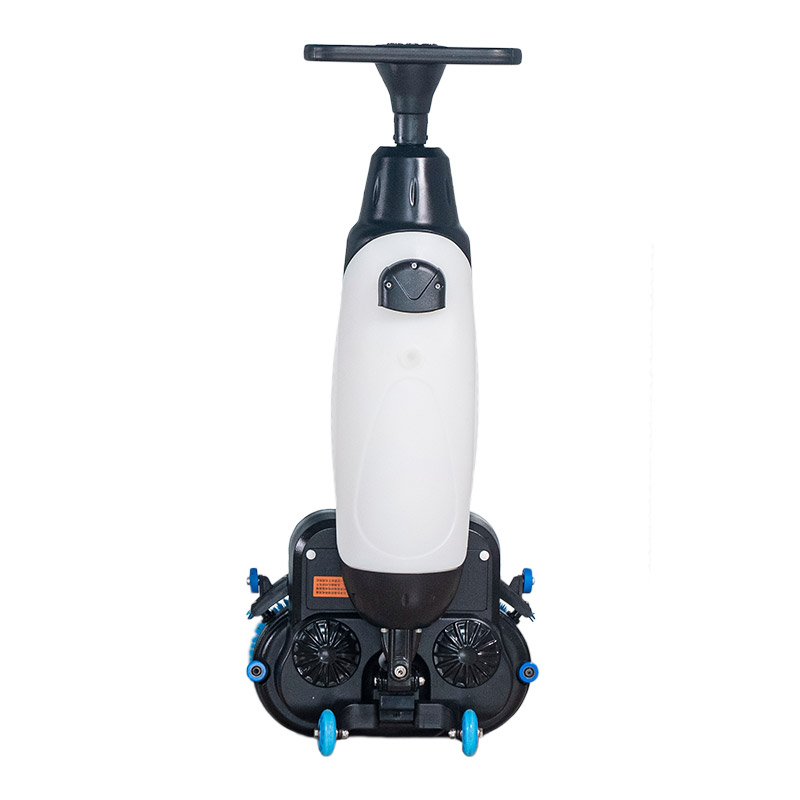
When floors remain damp for minutes or hours, operators often blame the machine's age. Usually, the actual culprit involves basic physics or routine maintenance failures. You can correct most water recovery issues without expensive repair bills. Below are the four most common reasons your machine fails to dry floors.
Worn or Improperly Adjusted Squeegees: Squeegee deflection plays a crucial role in water recovery. The blade must bend slightly to create a vacuum seal against the floor. If you apply too much downward pressure, the blade folds over completely. A folded blade breaks the suction seal. Similarly, a blade holding a dull, worn edge cannot wipe the floor clean.
Airflow Obstructions: The vacuum system demands a perfectly clear pathway. Minor debris easily becomes lodged in the narrow squeegee neck. Screws, zip-ties, or large dirt particles often jam the recovery hose. Even a partial blockage immediately degrades the suction power at floor level.
Improper Solution Flow Settings: Operator error frequently causes unnecessary puddling. Operators sometimes crank the water dispensing valve to its maximum setting. The vacuum system possesses a fixed capacity for water removal. If you dispense too much water at a slow walking speed, you overwhelm the vacuum.
Full Recovery Tanks or Worn Gaskets: The vacuum motor relies on a completely sealed recovery tank. A torn or missing tank lid gasket introduces a massive vacuum leak. The motor pulls air from the room instead of from the floor. Additionally, a full recovery tank triggers the float shut-off valve. This valve mechanically halts water recovery to protect the motor from flooding.
Upgrading your fleet requires careful attention to specific spec sheet details. Facility managers often focus heavily on cleaning path width and battery life. While important, those features do not guarantee dry, safe floors. You must map physical features to your desired drying outcomes.
Start by evaluating the squeegee assembly closely. Prioritize machines offering tool-free squeegee removal systems. Operators show much higher compliance with cleaning protocols when the task is easy. Look for breakaway squeegee designs as well. These mounts protect the machine upon accidental impact with walls or shelves. They pop off safely while maintaining their factory alignment upon reattachment.
Do not let motor specifications mislead you. Buyers often look solely at high brush RPM (Revolutions Per Minute). Aggressive scrubbing power means little if you cannot remove the resulting slurry. High brush pressure without proportional vacuum water lift guarantees a wet floor. You need a balanced machine. Every walk behind floor scrubber should clearly list its water lift capabilities.
Finally, inspect the down-pressure and traction systems. The machine's drive system must maintain a consistent, steady pace. Some lighter machines slip on their own dispensed cleaning solution. A loss of traction causes the machine to stutter. Stuttering breaks the squeegee seal, leaving distinct horizontal lines of water behind.
Technology alone cannot overcome poor operational habits. Your custodial team must adopt specific daily routines to ensure maximum water recovery. The process begins long before the machine ever touches the floor. It ends only when the machine is properly parked and cleaned.
Pre-sweeping stands as a strict prerequisite for automated floor cleaning. You must emphasize to your staff that no scrubber is a dry vacuum cleaner. Dust mops or brooms must clear the area first. Pre-sweeping removes pallet splinters, rocks, and large debris. Skipping this step guarantees debris will clog the squeegee neck. Pre-sweeping is entirely non-negotiable if you want to protect the squeegee seal.
Custodians must follow a strict post-scrub checklist every single shift. Emptying and thoroughly rinsing the recovery tank removes heavy sludge. Sludge left overnight hardens and smells terrible. Operators must physically wipe down the squeegee blades with a damp cloth. This prevents harsh chemical and mineral buildup along the sensitive wiping edge. Finally, always leave the recovery tank lid open during storage. An open lid prevents bacterial odor and stops the rubber gaskets from deteriorating.
You must establish a standardized cadence for blade rotation. Squeegee blades feature four usable edges. You can flip them front-to-back and top-to-bottom. Establish a fixed schedule for operators to inspect and rotate these blades. Do not wait for the floors to become dangerously wet. Proactive blade management prevents slip-and-fall hazards before they ever occur.
Achieving perfectly dry floors immediately after scrubbing is not an impossible dream. It is the standard expectation for modern custodial operations. Wet floors are rarely an inherent flaw of mechanized scrubbing. Instead, they signal a mismatch in equipment, worn consumables, or operator error.
Assess your current floor types and match your squeegee material accordingly.
Train operators on the critical importance of pre-sweeping and daily machine maintenance.
Monitor your vacuum seals, hoses, and gaskets for air leaks regularly.
Evaluate machine specs based on balanced water lift and CFM, not just brush speed.
Facility managers should conduct a simple moisture test on their current fleet today. Check your squeegee edges for excessive wear. Evaluate if your current machines truly meet modern "dries-as-it-cleans" standards. If your floors remain wet for minutes, it is time for an upgrade. Prompt a consultation or request a product demo to see a high-performance machine in action.
A: No. Standard auto scrubbers rely entirely on an integrated vacuum and squeegee system to remove dirty water. Without the vacuum motor creating suction, the squeegee would only push water around the floor, leaving large puddles behind.
A: It depends heavily on usage frequency and floor roughness. Typically, blades should be flipped or rotated every 50 to 100 hours of active use. Once all four edges are worn or nicked, you must replace the blade entirely.
A: This usually happens due to a straight squeegee design failing to capture water on a tight radius. It can also result from incorrect squeegee spring tension. Upgrading to a parabolic squeegee assembly easily solves this turning issue.


