


close
Choose Your Site
Global
Social Media


Views: 0 Author: Site Editor Publish Time: 2026-08-11 Origin: Site


Transportation and storage are never an afterthought. They act as critical components driving your equipment performance and longevity. Mishandling a walk behind floor machine during transit or downtime causes premature failure. It also serves as a primary driver for voided manufacturer warranties.
These units remain highly vulnerable to environmental and physical damage. They carry extremely heavy battery banks. They utilize highly sensitive squeegee blades. Internal fluid lines run throughout the entire chassis. Physical shock, severe temperature extremes, and general staff neglect destroy these delicate components rapidly.
Protecting this capital investment requires strict adherence to standardized logistics protocols. You will learn exactly how to prepare your equipment safely. We will explore correct loading techniques, securement rules, and climate control necessities. You will also discover how to execute long-term battery management routines effectively.
Always drain solution and recovery tanks completely before moving or storing to prevent water damage, bacterial growth, and freezing.
Remove all floor contact components (brushes, pad drivers, squeegees) to prevent warping and permanent deformation.
Secure the machine using manufacturer-designated tie-down points during transport; never strap over fragile handles or control panels.
Store in a climate-controlled environment with strict battery maintenance protocols (continuous charging for lead-acid/AGM; specific SoC for lithium-ion).
Leave the recovery tank lid open during storage to allow airflow and prevent odor buildup.
Thorough preparation prevents catastrophic equipment failure. You must establish a strict teardown routine before moving or storing any commercial cleaning unit.
You must empty both the recovery and solution tanks every single time. Water left inside creates massive operational problems. The solution tank holds diluted chemical mixtures. These chemicals separate over time. They leave a sticky residue behind. This residue clogs the solution filter permanently. It hardens inside the delicate solenoid valve. You must drain this tank completely to protect the plumbing.
Recovery tanks pose an even bigger threat. They hold dirty water, heavy grease, and abrasive floor soil. If left sitting, this mixture turns into a toxic sludge. Sludge settles at the very bottom of the tank. It coats the vacuum intake screen heavily. You must flush the recovery tank thoroughly after draining it. Use a high-pressure hose. Spray the interior plastic walls meticulously. Watch the rear drain hose closely. Wait until completely clear water flows out. Only then is the tank truly clean.
Floor contact components require special attention. Brushes and pad drivers bear the entire weight of the front end. Bristles bend aggressively under this continuous downward pressure. Over several weeks, they take on a permanent sweep. A warped brush cleans unevenly. It causes the machine to bounce violently during operation. Squeegee blades suffer similar permanent damage. They consist of soft rubber or delicate polyurethane. Resting the machine on the squeegee curls the rear wiping blade. It ruins the precision edge. A damaged wiping edge leaves dangerous streaks of dirty water behind. It increases slip and fall hazards significantly. You must detach these parts entirely. Store brushes flat on a dry shelf. Hang the squeegee assembly safely on a dedicated wall hook.
Electrical safety requires distinct procedures depending on your ultimate goal. Transit requires complete battery isolation. Trucks bounce heavily over deep potholes. Trailers vibrate violently on open highways. These vibrations can cause internal wires to chafe. A short circuit during transport can easily start a fire. Disconnect the main battery terminal connector before shipping the unit. Tape the connector ends securely. Storage requires a completely different electrical approach. You want the batteries ready for the next cleaning shift. You must plug the unit into an approved maintenance charger. We will explore specific battery charging rules in a later section.
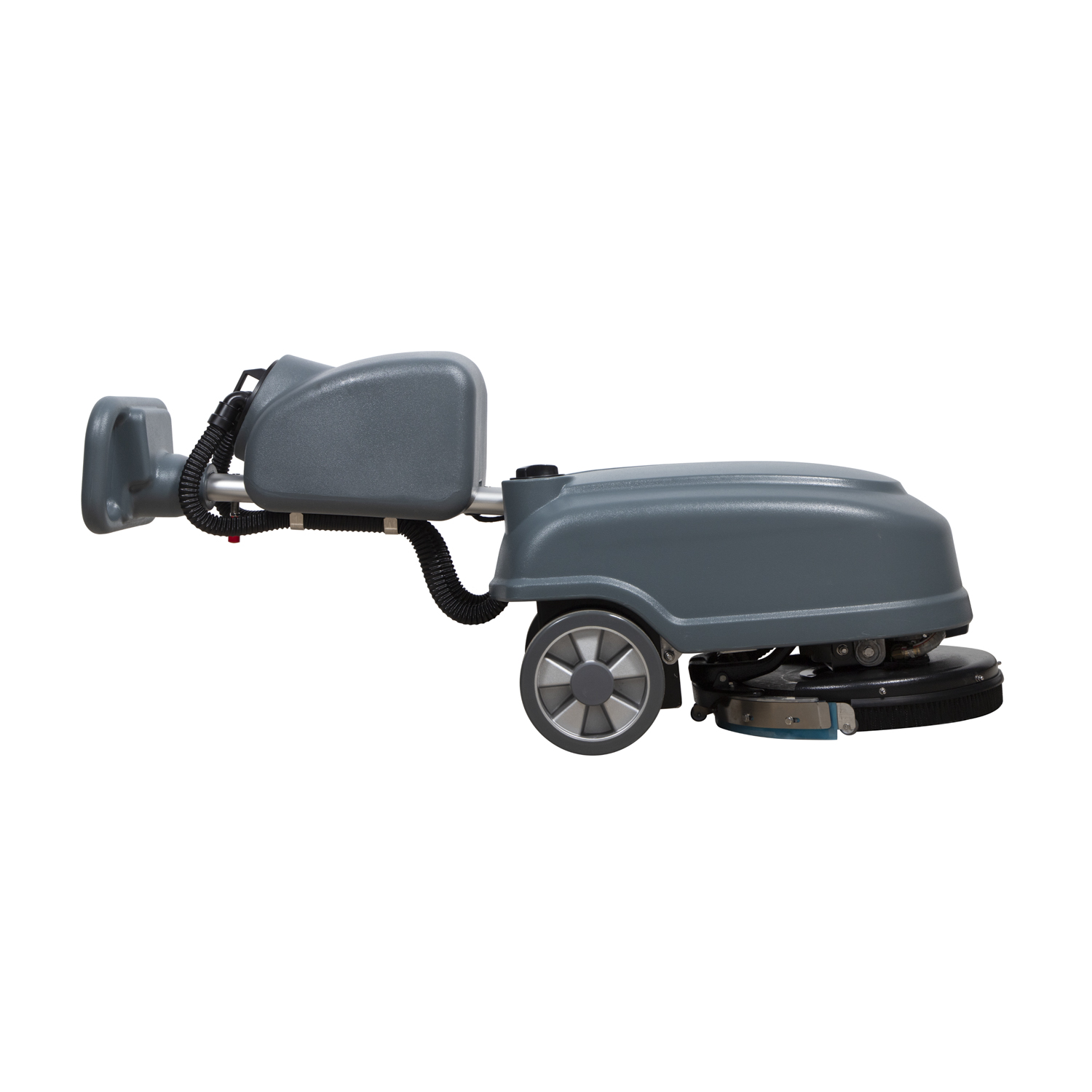
Transporting heavy facility equipment requires careful logistical planning. A standard commercial unit often exceeds three hundred pounds. Massive battery banks add substantial bulk. You cannot lift it manually.
You must rely on mechanical loading methods exclusively. A commercial loading dock provides optimal safety. You simply drive the unit straight into the box truck. The transition remains completely level and safe. Many facilities lack dedicated dock infrastructure. You must use a drop-deck equipment trailer in these specific cases. These trailers use hydraulic lines. They lower the entire metal bed flat to the pavement. You roll the machine on effortlessly. Never use narrow, steep aluminum loading ramps. Steep inclines shift the heavy center of gravity backward. The unit can easily tip over. It can crush the operator underneath instantly.
Loading Method | Overall Safety Level | Primary Operational Advantage | Key Logistics Risk Factor |
|---|---|---|---|
Commercial Loading Dock | Highest | Level transition onto truck bed | Requires specialized facility infrastructure |
Drop-Deck Equipment Trailer | High | Trailer bed lowers flat to the ground | Requires a towing vehicle and hitch |
Steep Aluminum Ramps | Extremely Low | Cheap and highly portable | Severe rearward tipping hazard |
Once loaded, the machine must remain completely stationary. Sudden highway stops will turn unsecured equipment into deadly projectiles. Identify the factory-designated anchor points immediately. You will usually find these thick steel loops on the lower chassis frame. Use heavy-duty ratchet straps for securement. Four separate straps provide the best stability. Hook two straps facing forward. Hook two straps facing backward. Tension them evenly across the deck. Never route straps over fragile areas. The steering column cannot handle lateral tension. Plastic recovery tanks will shatter under heavy strap pressure. The aluminum scrub deck can bend out of factory alignment. Secure the lowest, heaviest metal frame components only.
Logistics introduce severe environmental hazards. Open flatbed trucks expose your investment to the elements. Sudden rainstorms flood the control panel electronics. Moisture ruins the sensitive vacuum motor windings. Highway transport kicks up dangerous road debris constantly. Flying rocks can easily crack the plastic tank housings. Road salt spray causes rapid metal corrosion on the undercarriage. Enclosed transport completely eliminates these risks. Box trucks provide ideal weather shielding. Sometimes enclosed transport remains impossible. You must use an open trailer instead. Cover the entire walk behind scrubber using a heavy-duty, waterproof canvas tarp. Bungee the tarp tightly around the base. Wind whip can snag loose plastic parts. Protect your equipment just like an expensive medical device.
Proper storage demands rigorous climate control. You cannot park the unit in an unheated outdoor shed. Freezing temperatures guarantee catastrophic internal failure.
Internal plumbing always retains microscopic amounts of moisture. Water expands rapidly as it freezes into solid ice. This expansion cracks plastic solenoid valves permanently. It splits internal rubber hoses wide open. It destroys the expensive solution pump mechanism. You must maintain storage room temperatures above freezing all year. Extreme heat also damages the unit severely. Hot environments bake the electronic control boards. Constant heat degrades the soft squeegee rubber prematurely. Choose an indoor, climate-controlled utility closet for long-term storage.
Battery replacement represents a massive operational expense. Good storage habits extend battery life for several years. Bad habits destroy them in mere weeks. Different battery chemistries demand specific routines.
Lead-Acid and AGM: These batteries suffer heavily from sulfation. Lead sulfate crystals form when you leave them discharged. These hard crystals coat the internal battery plates. They permanently reduce the overall battery capacity. Prevent this by connecting them to a smart charger continuously. The charger provides a tiny, safe float voltage. It keeps the internal plates clean and highly active.
Lithium-Ion: These batteries demand completely different rules. They do not suffer from sulfation. Storing them at full capacity stresses the internal cells. Check your manufacturer guidelines closely. Most brands recommend a storage state of charge around forty to sixty percent.
The recovery tank creates a perfect biological incubator. It remains dark, damp, and exceptionally warm. Anaerobic bacteria thrive in this exact environment. They multiply rapidly if you seal the lid shut. Within days, a severe sewage odor develops. The smell embeds deeply into the porous plastic tank walls. Skipping this simple step creates huge maintenance problems. Staff must spend hours scrubbing the infected tank manually. They have to use aggressive chemical enzymes to kill the smell. The odor can linger in the facility for months. Simply prop the recovery tank lid open. Use the built-in plastic prop arm. Continuous airflow dries the interior walls completely. It stops bacterial growth instantly.
Improper handling carries heavy financial penalties. Facility managers often overlook these hidden operational costs. You must understand the severe consequences of logistical neglect.
Consider warranty invalidation risks first. Manufacturers employ highly trained service technicians. They know exactly what operator abuse looks like. A split solenoid clearly indicates freeze damage. A cracked lower chassis proves a severe drop impact occurred. Coated battery plates confirm long-term charging neglect. Manufacturers will void your standard warranty immediately upon seeing these telltale signs. You lose all protective coverage instantly. You will pay for all replacement parts out of pocket. You will cover the expensive hourly labor rates yourself.
Equipment failure ruins facility productivity. Imagine preparing for a massive corporate visit. Your team needs to deep clean the main lobby quickly. They pull the machine out of the storage closet. They find the batteries completely dead from sulfation. They discover the squeegees are permanently warped. The machine bounces aggressively because the brushes sat flat on the floor. You cannot clean the lobby effectively. Floors remain dirty and dull. This creates a severe operational bottleneck. Staff must resort to manual string mopping. Manual mopping wastes dozens of precious labor hours. It yields vastly inferior cleaning results.
Consistency prevents these disastrous scenarios. Facility managers must establish rigorous Standard Operating Procedures. You need a physical checklist for accountability.
Empty and flush both solution and recovery tanks completely.
Remove the squeegee assembly and hang it on a designated rack.
Detach the brush or pad driver and store it flat.
Connect the appropriate battery charging system immediately.
Prop the recovery tank lid open to guarantee continuous airflow.
Require your cleaning staff to initial the list after every shift. Supervisors should perform random weekly audits. Check the machines visually to ensure absolute compliance. Strict routines turn good guidelines into permanent habits. This routine guarantees long-term reliability. Training staff on these protocols saves thousands in unnecessary repair bills.
A commercial cleaning unit represents a significant financial investment. It is heavy, highly sophisticated industrial machinery. It requires disciplined handling at all times. Proper logistics prevent broken parts, cracked tanks, and failed batteries. You must treat storage routines as rigorously as active cleaning tasks.
Facility managers must take action today. Integrate these transport and storage guidelines into your staff onboarding programs immediately. Train your team regularly on these physical steps. Create laminated checklists for your storage closets. Always consult your specific owner's manual before making assumptions. Manufacturers list model-specific tolerances there. Protect your equipment properly to ensure pristine floors year round.
A: No. You must never leave it in freezing environments. Residual water always remains inside pumps and internal lines. This trapped water will expand as it turns to solid ice. Expanding ice cracks solenoids, valves, and expensive internal components. Freeze damage is highly visible to technicians. It will void your manufacturer warranty immediately.
A: Never transport the unit on its side or back. This orientation creates severe hazards. Traditional lead-acid batteries will leak corrosive acid everywhere. Internal oils and fluids can displace into the vacuum motor. The heavy weight will crush delicate plastic side panels. It causes severe structural damage. Always transport it completely upright.
A: Maintenance depends entirely on your battery chemistry. Keep traditional lead-acid or AGM batteries plugged into a smart maintenance charger continuously. This prevents hard sulfation on the plates. If a smart charger is unavailable, charge it to full capacity at least once every 30 days. Lithium-ion batteries usually require a partial charge. Follow your manual for exact lithium storage percentages.


