


close
Choose Your Site
Global
Social Media


Views: 0 Author: Site Editor Publish Time: 2026-06-08 Origin: Site


A mop may look simple, but it often moves dirt instead of removing it. In busy commercial spaces, wet floors, slow cleaning, and repeated labor can quickly become daily problems. A walk behind floor scrubber, also called a walk behind scrubber, helps solve these issues by washing, scrubbing, and drying hard floors in one pass. In this article, you will learn what it is, how it works, where it fits, and how to choose the right one.
A walk behind floor scrubber is a commercial floor cleaning machine guided by an operator from behind. It uses water, detergent, brush pressure, vacuum suction, and a recovery tank to clean hard floors more efficiently than manual mopping. A walk behind scrubber is useful in supermarkets, warehouses, hospitals, schools, hotels, factories, and other high-traffic areas. It is smaller and easier to control than a ride-on floor scrubber, yet stronger than basic manual cleaning tools. When choosing one, look at floor size, cleaning path width, tank capacity, power source, brush type, and maintenance needs. A compact walk behind floor scrubber can be ideal for narrow spaces, while an industrial walk behind floor scrubber is better for heavier soil and larger daily workloads.
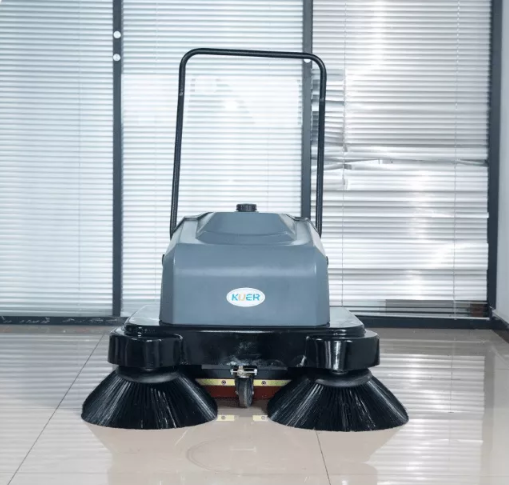
A walk behind floor scrubber is a hard floor cleaning machine used in commercial and industrial spaces. The operator walks behind the machine and guides it across the floor. As it moves, it applies cleaning solution, scrubs the surface, removes dirty water, and helps leave the floor dry.
It is often called a walk behind scrubber, walk behind auto scrubber, or walk behind floor cleaning machine. These names describe the same basic idea: a powered scrubbing machine built to clean floors faster and more evenly than a mop.
Manual mopping depends on hand pressure, bucket water, and repeated passes. Once the mop becomes dirty, it can spread soil back onto the floor. It also leaves more water behind, which can increase slip risks.
A walk behind scrubber works in a more controlled way. It releases clean solution, uses a brush or pad to loosen dirt, then recovers wastewater through suction. This means dirty water does not stay on the surface. The result is cleaner, safer, and more consistent.
The core work of a floor scrubber can be explained in three actions. First, it wets the floor with water and detergent. Second, it scrubs the floor with a rotating brush or pad. Third, it collects dirty water through a squeegee and vacuum system.
This three-step process is why a commercial walk behind floor scrubber saves time. It does not only wash the floor. It also removes the water after washing.
The name comes from the operator position. The user does not sit on the machine. They walk behind it and control the cleaning path. This design gives good control in aisles, corridors, entrances, lobbies, and other areas where a larger machine may be hard to turn.
Walk behind scrubbers come in several designs. Some are compact and easy to move in tight spaces. Some are battery powered, which gives more freedom in areas without nearby outlets. Some corded machines suit fixed indoor routes where continuous power matters. Larger versions may be self-propelled, while smaller ones may need more manual pushing.
These machines are used by facility teams, cleaning contractors, property managers, schools, hospitals, supermarkets, warehouses, hotels, factories, and public buildings. They are especially useful where floors must look clean, dry quickly, and stay safe during daily operations.
Note:For daily facility cleaning, the biggest value is not only speed. It is consistent cleaning quality over repeated use.
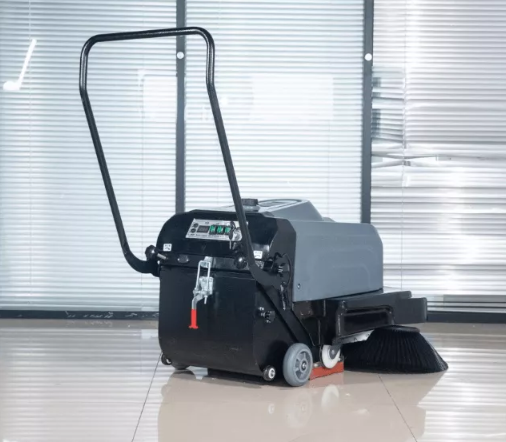
A walk behind floor scrubber machine has a solution tank. This tank holds clean water and the correct amount of cleaning detergent. During operation, the machine releases the solution onto the floor near the brush or pad area.
The detergent should match the floor material and soil type. Too much chemical can create foam or leave residue. Too little may reduce cleaning power. A balanced mix helps the machine clean well and recover water properly.
After solution reaches the floor, the brush or pad begins to scrub. This is the part that does the mechanical work. It breaks up dust, stains, grease, footprints, and light surface buildup.
Brushes are often used for textured or durable floors, such as concrete or tile. Pads are often used for smoother floors or more delicate finishes. The right brush or pad protects the floor while improving cleaning results.
Behind the brush area, the squeegee gathers dirty water. The vacuum system then pulls that water into the recovery tank. This is one of the key differences between an auto scrubber and a mop.
If the squeegee is worn, dirty, or poorly adjusted, the machine may leave streaks. If the vacuum system is blocked, water recovery may become weak. For this reason, daily checks are important.
The recovery tank stores wastewater after scrubbing. This keeps dirty water away from the clean floor. It also helps the surface dry faster, which is important in areas where people need to walk soon after cleaning.
Tip:Empty and rinse the recovery tank after each use. This reduces odor, buildup, and avoidable machine problems.
A walk behind scrubber is useful in supermarkets, shopping malls, office buildings, hotels, restaurants, and public corridors. These spaces often collect dust, footprints, spills, and daily dirt. They also need quick cleaning because customers, staff, and visitors use the floors all day.
A compact walk behind floor scrubber works well in these areas because it can move around shelves, furniture, entrances, and narrow routes. It can clean more evenly than a mop and usually leaves less water behind.
Hospitals, clinics, schools, airports, stations, and community buildings need stable hygiene. These sites also need faster drying floors because slips can create safety issues.
A walk behind auto scrubber helps teams clean at a regular standard. It can support daily maintenance cleaning in hallways, classrooms, waiting areas, treatment areas, and public entrances.
An industrial walk behind floor scrubber is useful for concrete, epoxy, tile, PVC, and other hard floors. Warehouses and factories often face dust, tire marks, packaging debris, and light oil residue. A stronger scrubbing machine can help reduce visible dirt and improve the working environment.
For heavy dust or dry debris, a sweeper may be used before scrubbing. This protects the scrubber and improves the final result.
A mop is cheap and simple, but it is not always efficient. It needs more labor, frequent water changes, and more drying time. It can also leave watermarks when the floor is not rinsed well.
A walk behind floor scrubber uses controlled water flow and mechanical scrubbing. It also recovers dirty water. This makes it a better choice for repeated cleaning in commercial spaces.
A ride-on floor scrubber is built for very large areas. It improves operator comfort and can cover wide spaces faster. However, it needs more storage room, wider turning space, and a larger budget.
A walk behind scrubber is easier to use in narrow or medium-sized areas. It is usually more flexible in corridors, shops, kitchens, smaller warehouses, and public buildings.
Small automatic cleaning equipment may work for light cleaning. However, a professional walk behind floor cleaning machine usually offers stronger brush pressure, larger tanks, better water recovery, and more durable construction.
If cleaning is needed every day, or if floors receive steady traffic, a commercial walk behind floor scrubber is usually the more practical tool.
A walk behind scrubber sits between a mop and a ride-on scrubber. It improves productivity without requiring the space or cost of a large ride-on machine. For many facilities, this middle-ground position is exactly what makes it valuable.
Cleaning Option | Best For | Main Advantage | Main Limitation |
Traditional mop | Small spots and quick touch-ups | Low cost | Slow and less consistent |
Walk behind floor scrubber | Small to medium commercial areas | Scrubs and dries in one pass | Needs training and upkeep |
Ride-on floor scrubber | Very large open areas | High area coverage | Needs more space and budget |
Sweeper | Dry dust and debris | Fast debris removal | Does not wash the floor |
Note:If the floor has loose debris, sweep first. Scrubbing over debris can reduce performance and wear parts faster.
Start with the size of the area. A small shop, clinic, or office corridor may need a compact walk behind floor scrubber. A warehouse, factory, or school may need a larger machine with more tank capacity and a wider cleaning path.
Cleaning path width affects how fast the machine covers the floor. Tank size affects how often the operator must stop to refill or empty water. Bigger is not always better. The right size should match the route, storage space, and cleaning frequency.
Different floors need different cleaning tools. Tile and concrete can often handle stronger brushes. Vinyl, marble, and polished floors may need softer pads. Epoxy floors may need a balanced setup to remove soil while protecting the surface finish.
Using the wrong brush can scratch the floor or fail to remove dirt. If the floor has grooves or texture, a brush may clean better than a flat pad.
A battery walk behind floor scrubber gives better movement. It is useful in supermarkets, warehouses, schools, and public facilities where cords may create trip hazards or limit cleaning routes.
A corded machine may suit smaller indoor areas where outlets are easy to reach. It can run as long as power is available, but the operator must manage the cord carefully.
Good cleaning equipment should be easy to understand. Look for simple controls, adjustable solution flow, clear battery indicators, strong squeegee design, easy tank access, and practical maintenance points.
Operators also benefit from a comfortable handle, stable turning, and clear control layout. If the team can learn the machine quickly, cleaning becomes more reliable.
Tip:Before buying, map your cleaning route. Door width, ramps, tight corners, and storage space can affect the best machine choice.
Before using a floor scrubber, remove loose debris. Stones, paper, packaging pieces, and wires can block the machine or damage parts. Place warning signs where people may walk near the cleaning area.
Check the solution tank, recovery tank, brush or pad, squeegee, battery, and controls. A quick inspection can prevent downtime during cleaning.
Move at a steady speed. If the operator walks too fast, the brush may not have enough time to loosen dirt. Clean in straight, overlapping paths to avoid missed strips. For stubborn stains, slow down or make a second pass.
Avoid sharp turns while the brush is down unless the machine is built for it. This protects both the machine and floor surface.
After cleaning, empty the recovery tank. Rinse both tanks if needed. Remove debris from the brush or pad. Wipe the squeegee blade and check for wear.
Store the machine in a dry, safe place. Keep the brush deck and squeegee raised when possible. For battery machines, follow correct charging habits to protect runtime and service life.
A walk behind floor scrubber helps teams clean faster, safer, and more evenly. It scrubs, washes, and recovers dirty water in one pass. Hefei Kuer Environmental Protection Technology Co., Ltd. provides commercial floor scrubbers and industrial sweepers for many floor cleaning needs. Its equipment supports compact use, strong cleaning, and easier daily operation.
A: A walk behind floor scrubber is a machine that washes, scrubs, and dries hard floors.
A: A walk behind scrubber uses solution, brush action, suction, and a recovery tank.
A: It cleans faster, removes dirty water, and leaves floors drier.
A: Cost depends on size, battery type, tank capacity, and cleaning power.
A: Yes. An industrial walk behind floor scrubber can clean concrete, epoxy, and tile.
A: Check the squeegee, vacuum hose, recovery tank, and blade wear.


