


close
Choose Your Site
Global
Social Media


Views: 0 Author: Site Editor Publish Time: 2026-07-28 Origin: Site


You finish running your floor cleaning equipment, expecting spotless results. Instead, you look back and see unsightly, unsafe streaks trailing behind you. This operational frustration wastes valuable time. It also compromises your facility's cleanliness standard. Streaking floors go beyond a mere aesthetic annoyance. Leaving unextracted water behind creates a serious safety compliance issue. It significantly increases slip-and-fall risks in high-traffic areas. Furthermore, it creates a massive labor inefficiency problem. Cleaning teams must manually mop or re-clean areas the machine failed to dry properly.
While streaky floors are a common headache, they are highly preventable. You can usually solve this problem through systematic troubleshooting. We will look at mechanical components, chemical ratios, and operator habits. Let's break down exactly why this happens and how to fix it fast. You will learn the exact steps to restore your floor care program.
Worn, torn, or incorrectly adjusted squeegee blades are the leading cause of floor streaks.
Vacuum system blockages in the recovery tank or hoses severely limit water extraction capabilities.
Incorrect chemical dilution leaves a soapy residue that manifests as streaks once dried.
Persistent streaking despite basic maintenance often indicates the need for professional servicing or a fleet upgrade.
Facility managers simply cannot ignore streaking floors. Many operators treat streaks as a minor visual flaw. However, streaks act as warning signs for deeper operational failures. Ignoring these warning signs drains your maintenance budget. It also exposes your business to severe liability.
Floor safety represents a massive liability for any public or commercial space. Occupational Safety and Health Administration (OSHA) guidelines mandate clean, dry walking surfaces. When water is not fully extracted, you leave puddles behind. These wet patches dramatically increase the risk of slip-and-fall incidents. A single slip-and-fall claim can cost a business thousands in legal fees and insurance premiums. Ensuring your equipment leaves floors bone-dry is a fundamental safety requirement.
Cleaning labor represents your highest facility maintenance cost. Every hour counts. When a machine leaves streaks, workers must double their efforts. They spend wasted labor hours re-cleaning the exact same aisles. Sometimes, they must manually mop areas the machine failed to dry. A task scheduled for one hour suddenly takes two. This inefficiency disrupts daily schedules. It forces operators to neglect other critical cleaning tasks to fix the mess.
Chemical residue buildup destroys commercial flooring over time. If a machine leaves streaks, it leaves cleaning chemicals behind. Once the water evaporates, a sticky alkaline film remains on the floor. Dirt clings to this sticky film immediately. This residue degrades floor finishes fast. It accelerates the need for expensive stripping and waxing cycles. Protecting your floor assets requires zero chemical residue.
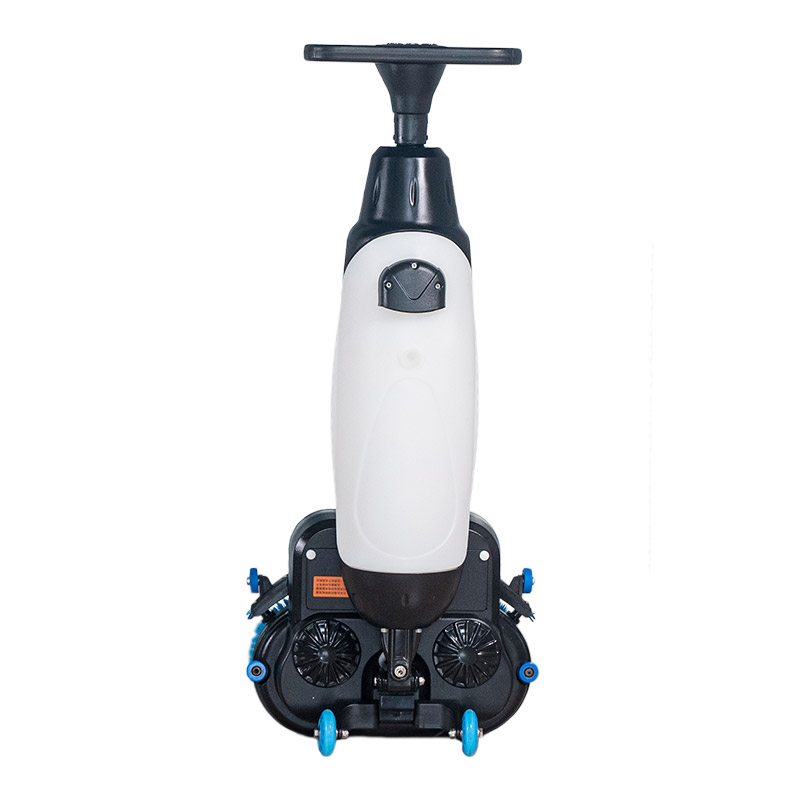
Troubleshooting requires an understanding of machine mechanics. A typical walk behind scrubber operates using three simple systems. It dispenses solution, scrubs the floor, and vacuums the dirty water. When streaks appear, one of these systems is failing. Let's examine the four most common culprits.
The squeegee assembly acts as the critical barrier between dirty water and a clean floor. Squeegee blades wear unevenly over time. Friction rounds off the sharp edges required to cut through water. Sometimes, operators flip the blade too many times. Eventually, the rubber loses its firm edge. It breaks the vacuum seal against the floor. A broken seal lets dirty water slip under the rubber, leaving distinct trail marks behind the machine.
Your machine needs powerful suction to lift water off the ground. Vacuum system failures severely cripple extraction power. Debris often clogs vacuum hoses. A full recovery tank triggers the float shut-off valve, instantly cutting off suction. Additionally, a compromised vacuum seal reduces suction power. If the recovery tank lid gasket cracks, the vacuum motor pulls air from the room instead of the floor. Weak airflow guarantees wet streaks.
Mechanics refer to squeegee adjustment using two terms: pitch and down pressure. Down pressure controls how hard the blade pushes against the floor. Pitch dictates the angle of the squeegee assembly. If the pitch is too high in the center, water escapes the outer edges. If down pressure is too heavy, the blade folds over completely. It drags across the floor rather than wiping it. Proper geometry ensures water channels perfectly into the suction hose.
Using the wrong floor pad creates massive issues. A highly aggressive pad strips finish and creates a hazy look. Conversely, using overly concentrated cleaning solutions leaves a sticky, streaky film. Operators often pour "a little extra" chemical into the tank. This habit overwhelms the clean water ratio. The machine cannot rinse the excess soap. The soapy water dries into dull, white streaks across your otherwise clean floor.
Operators need fast solutions on the floor. They rarely have time to call immediate maintenance. Use this fast, logical sequence. Operators can diagnose the issue mid-shift and return to cleaning quickly.
Stop the machine in a safe area. Lift the squeegee assembly. Inspect the squeegee edge for trapped debris. Look for zip ties, pebbles, pallet splinters, or hair. A single pebble trapped under the rubber breaks the floor seal. Wipe the blade entirely clean using a damp microfiber cloth.
Lower the squeegee back onto the floor. Ensure the squeegee pitch allows for a slight, even deflection. You want a 45-degree angle across the entire blade. The ends should touch the ground evenly. Adjust the pitch dial if the center or edges lift off the floor. Do not over-tighten the assembly.
Disconnect the vacuum hose from the squeegee assembly. Turn the vacuum motor on. Place your hand over the hose opening. Check for strong, aggressive suction. If suction feels weak, trace the hose back to the tank. Inspect the recovery tank filter for lint or sludge. Clean the filter immediately.
Look closely at the leading edge of the rubber. Identify if the edge looks rounded, wavy, or torn. Most squeegee blades have four usable edges. Identify if it is time to flip, rotate, or replace the blade. If all four edges look worn, install a brand-new blade.
Check your chemical dilution system. Ensure the machine isn't dispensing pure chemical. Dump the solution tank if the mixture looks too sudsy. Refill it using exact manufacturer specifications. Excess foam in the recovery tank also ruins vacuum suction. Always measure chemicals precisely.
Preventative care extends equipment life. It stops streaking before it starts. Consistent maintenance practices guarantee spotless floors every single shift. Implementing strong routines saves money on emergency repairs.
Emphasize the vital importance of post-shift clean-downs. Operators must rinse the recovery tank thoroughly after every use. Sludge left in the tank dries out and clogs filters. Always leave the recovery tank lid open to air dry. This prevents mold and protects the vacuum motor. Remove and wash the squeegee assembly daily. Hang it to dry. These simple Standard Operating Procedures (SOPs) prevent 90% of streaking issues.
Wear parts do not last forever. You must replace them regularly. A standard walk behind floor scrubber burns through pads and rubber blades. Provide realistic timelines for replacing these wear parts. Smooth concrete floors wear blades slowly. Rough, unpolished concrete destroys blades quickly. Keep spare parts stocked in your supply closet.
Common Consumables Replacement Schedule
Component | Typical Lifespan | Signs for Immediate Replacement |
|---|---|---|
Squeegee Blades | 100 - 150 hours per edge | Rounded edges, deep tears, or wavy rubber. |
Floor Pads | 15 - 20 hours | Pad thickness reduced by half, tearing, or heavily soiled. |
Vacuum Hoses | 1 - 2 years | Visible cracks, loss of flexibility, or internal sludge buildup. |
Tank Gaskets | 12 - 18 months | Brittle texture, cracking, or failure to hold suction. |
Machines rarely break themselves. Poor handling causes most failures. Suggest logging maintenance checks to ensure proper machine handling. Post a sign-out sheet near the equipment bay. Require operators to initial the sheet after completing their daily clean-down. This accountability reduces premature component failure. It ensures everyone treats the equipment properly.
Sometimes, troubleshooting fails. Old machines lose their extraction power entirely. Facility managers face a tough choice. Do you keep paying for repairs, or do you buy new equipment?
Guide your team on assessing whether the current machine acts as a money pit. Look at the age of the equipment. Review the service logs. If a machine requires monthly service calls just to maintain suction, it has reached the end of its useful life. Persistent streaking often indicates failing internal vacuum motors. Replacing motors often costs more than the machine is worth.
Compare the cost of recurring service calls against the return on investment of a new machine. Labor hours wasted on wiping up streaks cost real money. Replacement parts get expensive. Factor in shipping costs and machine downtime. A new machine operates flawlessly, eliminating wasted labor. The labor savings alone often justify the upgrade.
Newer models offer incredible technological advancements. They feature self-leveling squeegees. These systems automatically adjust down pressure based on floor texture. They offer automated chemical dilution. This completely removes the risk of soapy streaks caused by operator error. Better vacuum technology leaves floors bone-dry in one pass. Upgrading eliminates human error from the cleaning equation.
Choosing a new supplier requires careful planning. Provide solid criteria for choosing a vendor. Look for comprehensive warranties covering vacuum motors and tanks. Evaluate local service availability. You need technicians who can respond quickly to breakdowns. Check parts accessibility. Ensure the manufacturer stocks squeegee blades and hoses locally. Good support guarantees your floors stay clean.
Streaking floors signal operational problems. They result from poor maintenance, operator error, or equipment nearing the end of its lifecycle. Leaving water behind endangers your staff and wastes expensive labor hours. Fortunately, careful troubleshooting resolves most issues.
Audit your current machine before your next shift. Use the five-minute checklist provided above. Wipe down your squeegee blades. Check your vacuum airflow. Measure your chemicals precisely. Train your team to rinse tanks and hang squeegees to dry daily. Small habits yield spotless results.
If your machine continues to fail despite basic maintenance, take action. Do not let terminal equipment failure ruin your facility standards. Contact a sales team for a professional site evaluation. Request a quote for replacement parts. Alternatively, view catalogs featuring next-generation cleaning machines designed to leave floors perfectly dry every time.
A: Straight-line streaks usually indicate a damaged squeegee edge. Edge-leaks during turns happen for different reasons. You might be taking corners too fast. Fast turns cause water to escape the squeegee side-skirts. Slow down around corners to give the vacuum time to extract the water. Alternatively, check the side-skirts for wear.
A: Replace or flip your squeegee based on usage, not time. A practical benchmark is checking the blade every 15 hours of use. If you clean rough concrete, you may need to flip the blade weekly. On smooth floors, a single edge might last a month. Flip the blade as soon as it rounds off.
A: Yes. Excess chemical creates heavy suds. The machine cannot vacuum pure foam efficiently. Furthermore, highly concentrated soap leaves a sticky residue. Once the water evaporates, this residue dries into visible white or dull streaks. Always follow exact manufacturer dilution ratios to prevent chemical buildup.
A: Material selection matters. Gum rubber provides excellent wiping on smooth, indoor floors but tears easily. Linatex offers superior durability and flexibility, making it perfect for uneven surfaces like grout lines. Urethane blades resist chemicals and oils. Choose urethane for industrial spaces or greasy environments to prevent the blade from swelling or degrading.


