


close
Choose Your Site
Global
Social Media


Views: 0 Author: Site Editor Publish Time: 2026-07-30 Origin: Site


Operating heavy commercial cleaning equipment demands rigorous physical effort. Facility teams often push through extended four-to-eight-hour shifts on hard surfaces. This grueling routine takes a massive toll on the human body. We often see procurement teams treat handle design as a mere luxury. They view it as a secondary comfort feature rather than an operational necessity. You must shift this perspective immediately.
Handle design serves as a critical determinant of sustained productivity. It directly impacts safety compliance and long-term employee retention. Poorly designed equipment actively sabotages your daily operational goals. Operators tire faster, make more mistakes, and risk serious injury.
We will explore why evaluating the ergonomic architecture of a walk behind floor machine remains a crucial risk management decision. You will learn how adjustability, grip materials, and strategic control placements dictate shift performance. Ultimately, you will discover actionable frameworks to shortlist the safest equipment for your facility.
Poor handle ergonomics force unnatural posture, accelerating musculoskeletal fatigue and decreasing cleaning efficiency over a shift.
Height-adjustable, vibration-dampening handles on a walk behind floor machine directly mitigate repetitive strain injuries (RSIs).
Strategic control placement allows for neutral wrist positioning, preventing hazardous overreaching and localized muscle exhaustion.
Procurement must balance the ergonomic benefits of adjustable handles with the mechanical durability of their locking mechanisms.
Physical exhaustion extends far beyond temporary operator discomfort. It directly compromises your facility management objectives. We must examine how fatigue systematically degrades daily performance metrics.
Physical fatigue immediately slows down walking paces. Operators naturally reduce their speed to conserve energy during long shifts. This sluggish pace leads directly to missed cleaning zones. Workers often skip tight corners or heavily soiled areas when they feel exhausted. Diminished energy also reduces their attention to critical safety hazards. Tired operators might overlook spill zones or fail to place caution signs. These operational bottlenecks compound over a week, severely degrading overall facility hygiene.
Common Mistake: Managers often blame the operator for slow work. They rarely investigate the equipment ergonomics causing the slowdown.
Best Practice: Track cleaning times during the first and last hours of a shift. Significant drops indicate severe operator fatigue.
Occupational health experts clearly understand the dangers of poorly designed equipment. Sustained grip force restricts blood flow to the hands and forearms. This constant tension rapidly accelerates muscle failure. Furthermore, mechanical vibration transfers directly from the machine chassis into the operator. Prolonged exposure causes micro-traumas to nerves and capillaries. Operators also suffer shoulder strain when rigid handles force them into awkward angles. These factors combined create a perfect environment for repetitive strain injuries (RSIs).
You can map fatigue directly to facility management overhead. Injured workers file costly compensation claims. Chronic pain leads to frequent absenteeism. Staff will simply call in sick rather than operate painful equipment. Ultimately, this drives up turnover rates. Replacing trained cleaning staff requires significant time and financial investment. Investing in better equipment ergonomics protects your budget from these hidden, compounding labor costs.
You cannot evaluate a machine simply by looking at it on a brochure. We must analyze the specific anatomical interactions between the operator and the equipment.
Your cleaning staff includes individuals of varying statures. A fixed handle height forces a shorter operator to reach uncomfortably high. It forces a taller operator to hunch over constantly. You must accommodate these different heights to maintain neutral spine alignment. A neutral spine prevents debilitating lower back strain. Adjustable angles allow operators to align their elbows close to their torso. This biomechanical advantage reduces the required pushing force significantly.
The physical composition of the grip heavily influences hand health. Hard plastic handles force operators to squeeze tightly to maintain control. Instead, you need high-friction, cushioned materials like molded neoprene. These soft materials reduce the required grip force drastically. They also absorb harsh machine vibrations before they reach the operator. This vibration dampening prevents hand cramping and tingling sensations during extended use.
Control layout dictates how often an operator must break their ergonomic posture. Dual-sided triggers offer excellent flexibility. Bail-style levers allow users to activate the machine using either hand. Variable-speed triggers provide precise control without requiring awkward finger stretching. These strategic placements allow operators to reposition their hands freely. They can adjust their grip without stopping the walk behind scrubber. Continuous movement improves both comfort and cleaning efficiency.
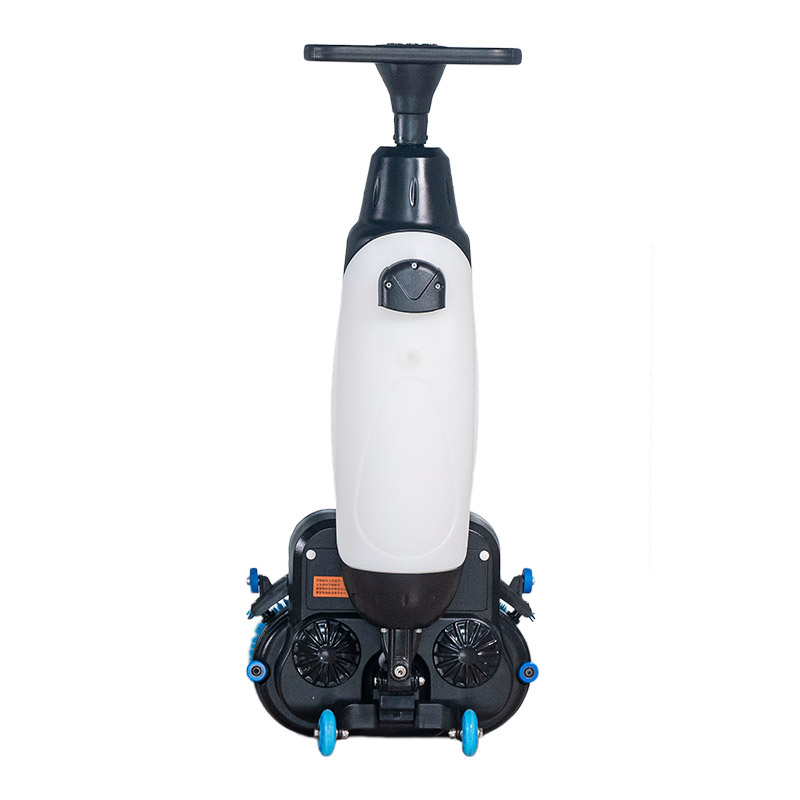
Procurement teams frequently debate the merits of fixed versus articulating designs. You must weigh upfront costs against long-term operational health. We provide a structured comparison to clarify this decision.
Fixed configurations offer distinct mechanical advantages for specific environments. They possess fewer moving parts, which inherently reduces failure points. This simplicity provides high structural durability under rough handling. They also present a lower initial capital cost. However, they carry massive ergonomic drawbacks. A rigid design forces the operator into physical adaptation. It rapidly accelerates fatigue for any staff member outside average height metrics. You basically trade operator comfort for basic mechanical simplicity.
Articulating configurations represent the ergonomic gold standard. They prove optimal for multi-operator, multi-shift environments. Every user can customize the machine to promote a neutral posture. This customization minimizes injury risks across diverse teams. The primary drawback involves mechanical vulnerability. Adjustable joints endure immense stress during turns and maneuvers. You must rigorously evaluate these locking mechanisms. Cheap joints will loosen, strip, or collapse under heavy commercial use.
Design Configuration | Primary Advantages | Primary Disadvantages | Best Use Case |
|---|---|---|---|
Fixed Handle | Low upfront cost, highly durable, zero moving parts to break. | Forces poor posture, increases fatigue for tall/short users. | Single-user sites, short intermittent cleaning tasks. |
Adjustable Handle | Promotes neutral posture, reduces strain, accommodates all heights. | Higher initial cost, joints require maintenance and inspection. | Multi-shift facilities, large teams, continuous daily use. |
Even machines boasting advanced ergonomic labels can fail in real-world scenarios. We must identify common engineering and adoption pitfalls. Recognizing these risks prevents costly purchasing mistakes.
Many manufacturers add adjustability using cheap, plastic tension levers. We call this the flimsy lever trap. These overly complex or cheaply manufactured joints quickly become maintenance liabilities. Stripped threads and broken clamps render the adjustability useless. Operators then tape or bolt the handle into a fixed position. You lose the ergonomic benefit while still paying the premium price. Always demand industrial-grade steel or heavy-duty cast aluminum for all adjustment joints.
A superior handle design cannot compensate for fundamental engineering flaws. Many buyers ignore the machine's overall center of gravity. If the machine suffers from poor weight distribution, operators will struggle. They will have to fight the machine to keep it moving straight. Inadequate brush-drive assist forces the user to push a heavy, dead weight. The handle might feel comfortable, but the excessive pushing force still causes severe exhaustion.
Ergonomic features only work if your staff actually uses them. We frequently observe operators bypassing adjustable features completely. They avoid making changes if the adjustment mechanisms feel stiff or unintuitive. If changing the height requires specialized tools, nobody will do it during a busy shift. The adjustment process must take less than five seconds. It must require zero tools and minimal physical effort. Otherwise, you face severe adoption friction.
You need a structured approach to validate marketing claims against operational realities. We recommend a strict physical evaluation process. Never buy commercial cleaning equipment based solely on specification sheets.
A quick five-minute drive around an empty showroom tells you nothing. Procurement teams must mandate rigorous, extended vendor demos. You need a test that lasts long enough to reveal latent vibration issues. Cumulative grip strain usually appears after twenty minutes of continuous operation. Force the vendor to demonstrate the machine on your facility's actual floors. Different floor textures heavily influence vibration transfer and pushing resistance.
Managers should never finalize a purchase order in isolation. You must establish a direct feedback loop with frontline cleaning staff. They possess the practical experience required to identify subtle design flaws. Include them in the physical evaluation process.
Select a diverse test group: Choose operators of varying heights and physical strengths.
Simulate real conditions: Have them clean tight corners, ramps, and varied floor surfaces.
Test adjustability: Ask each operator to change the handle height independently.
Gather structured data: Use a simple rating scale for grip comfort, vibration, and maneuvering effort.
Review joint integrity: Inspect the locking levers for any signs of slipping after the trials.
This structured feedback ensures you select a machine that actually supports your workforce. It removes guesswork and aligns your procurement strategy with daily operational realities.
Prioritizing handle design represents a strategic, measurable investment in your workforce. It is not merely about comfort; it is about workforce sustainability and operational consistency. Proper ergonomics actively protect your staff from debilitating injuries. They reduce costly turnover and ensure your facility stays clean.
You must evaluate grip materials, trigger placements, and structural adjustability thoroughly. Avoid flimsy locking mechanisms and machines with poor weight distribution. We strongly recommend scheduling a multi-user, on-site demonstration immediately. Validate these ergonomic claims against the specific friction and layout of your facility's flooring. Empower your operators with equipment that works with them, rather than against them.
A: Prolonged vibration exposure causes micro-trauma to nerves and capillaries in the hands. This leads to conditions like Hand-Arm Vibration Syndrome (HAVS). Operators experience numbness, tingling, and reduced grip strength. Quality handle materials absorb these mechanical shocks. Dampening mechanisms protect the circulatory system during long shifts.
A: No, it cannot entirely prevent musculoskeletal disorders. Handle design remains a major factor in reducing strain. However, you must pair it with comprehensive safety practices. Operators need proper training on machine operation. Consistent machine maintenance ensures smooth movement. Furthermore, supportive footwear is essential for long shifts on hard surfaces.
A: The ideal standard ergonomic benchmark positions the handle roughly at belt or hip level. This specific height allows operators to maintain a neutral bend in their elbows. Forearms should remain parallel to the floor. This posture minimizes shoulder elevation and prevents excessive leaning, protecting the lower back from strain.


